Archive for category: travel

Bolzano, Italy: A Mountain Town with Culture, Class, & History.

Bolzano is a fascinating stop on our Grand Tour. It’s located in the Italian Alps, but German speaking. Along with its outstanding natural beauty it houses one of Europe’s most interesting archeological finds: Ötzi, the mummified remains of a prehistoric man found in 1991 by hikers in the nearby mountains. In the following post Tim Pozzi of BBC Travel highlights some of Bolzano’s many charms. 

Bolzano is the gateway to the Dolomites. It sits in a valley, and it’s quite something to gaze up from the main square, pretty Piazza Walther, at the forest-clad slopes and ridges of jagged limestone that surround it.
The centre is traffic-free, so as you meander away from Piazza Walther you hear sparrows cheeping, coffee machines whirring, old women gossiping, cups and saucers clinking.
The colourful medieval, Gothic and Belle Époque buildings, with their stepped gables, turrets and attractively faded frescoes, have a north European feel. Yet the porticoed main commercial street, Via Portici, feels Mediterranean. At Piazza delle Erbe, described with pleasure by Goethe in his Italian Journey, the two flavours meet. Some of the cosiest bars and cafés are hidden behind the stalls of fruit and flowers, spices and cheeses. And speaking of fruit – did you know that South Tyrol produces 12 per cent of Europe’s apples?

Bolzano’s churches; its Franciscan cloisters with 15th-century frescoes of monks from Scotland and Newcastle; its Mercantile Museum; and Museion, a spectacular, glass-clad collection of modern art on the banks of the River Talvera, are all rewarding places to visit. But Bolzano’s biggest attraction is Ötzi, a mummy discovered by chance in 1991 after spending the previous 5,300 years frozen in mountain ice. Most intriguingly, he was murdered.
You can see Ötzi in his fridge, kept at 21F (-6C), at the Museum of Archaeology, alongside a thrillingly vast quantity of artefacts found with him, from bear-fur hat to bow and arrows, and fascinating footage of the police, not realising how old he was, extracting his body.
This being the 20th anniversary of his discovery [in 2011], there is also a stunning new reconstruction of how tattooed, muscly Ötzi would have looked on the last day of his life.
The chance to come face to face with a man who lived some 500 years before the building of the Pyramids makes the journey to Bolzano worthwhile on its own.

Being in History

Visiting Europe is a kind of historical re-awakening – a way of linking to our collective past.  Walking down a centuries old cobblestone road, walking between centuries old buildings, I get the feeling that in some way, the past is alive in these places.  With the correct historical context, or a guide who can provide it, you will get this feeling too.

When I take a OneLife Tours group into the 850 year old Notre Dame Cathedral in Paris, I like to tell some of the great stories from the church’s history.  But I also want my travelers to get in “touch” with history.  Inside, at the back of this gothic enormity, I take them to one of the huge stone pillars.  And I invite them to touch it.  And to imagine the hands that quarried these stones, that carefully chipped them into this shape, and placed them at the base of the column.  To realize that those people lived, worked and died here, in history, and that those who placed the stones we can actually touch would not have lived to see their work completed (in fact even their great-grandchildren would not have seen this – the cathedral took 200 years to build!)  This is history.  This is being in history.  

Do this when you travel. Be in history.              www.onelifetours.ca
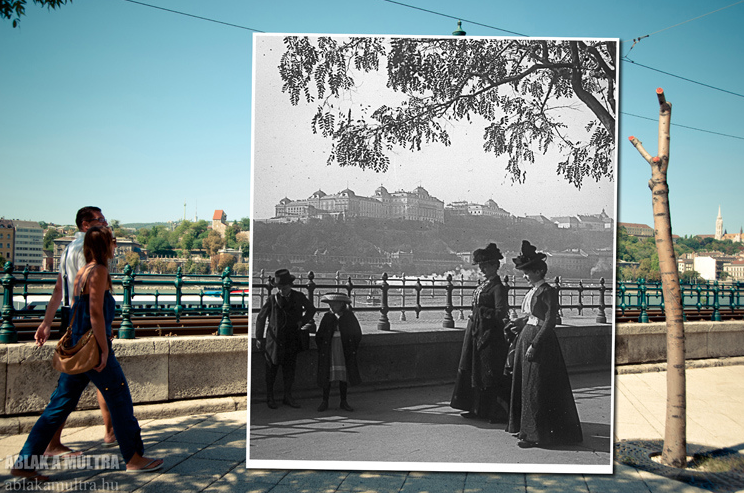
Hungarian photographer Ablak Múltra forces people to “be in history” by overlaying old photographs over new images captured in the same place. The results can be stunning!

5 Great Water Experiences in Europe

Humans are drawn to water.  There is a universal appeal to the beauty of a waterfall, a small stream, a crystal clear lagoon.  Just look at house prices – the closer you are to a coastline or a lake, the more expensive the property.  When I share pictures from travels in Europe, I can prove statistically that the ones that have water in them, whether they be the Ligurian coastline of Italy’s Cinque Terre, the Grand Canal of Venice, the Seine River in Paris, or the waterfalls of Plitvice in Croatia, are by far the most popular (they get the most “likes” and “shares” on facebook). But it is not just aesthetics – our attraction to water goes much deeper than the “surface”.
Water sustains life, and makes up more than 50% of our own bodies by weight.  It is a powerful force that can bring positive energy (medieval watermills / modern hydro-electric dams) but also unstoppable devastation (tsunamis, floods).  And of course there is the mystery – another world exists in the water – one that humans can visit briefly, but never join.

Despite the danger and the unknown, we love to be near the water, on the water, over the water, and in the water.  Travelers routinely seek out any available water-themed experiences.  Here are a few you should try in Europe: 

#5 – Paris, France:

A cruise down the Seine River

Screenshot 2015-07-15 10.14.49

I prefer to do this in the evening, when Notre Dame, the Conciergerie, the Eiffel Tower and other riverside structures are beautifully lit up.  It’s a good way to relax for an hour or so after a day of sightseeing in Paris.  If you are staying in the Latin Quarter area, take the Vedettes du Pont Neuf  near Saint Chapelle.  If you are staying closer to the Eiffel Tower/Rue Cler area, take the Bateaux Parisiens.  You can also splurge and take one of the dinner cruises – reservations and proper attire required.  Join us in Paris for three nights on our Grand Tour!


#4 – Cinque Terre, Italy:

A swim in the Mediterranean – any time of year?

Screenshot 2015-07-15 10.16.03

I take tour groups to Europe in the summer, when you will see lots of people, locals and tourists,  populating the beautiful beaches on the coast of Italy.  I also take groups in March, when, on what a Canadian would call a nice warm day, the locals, in their full length winter coats and scarves, will watch in disbelief as a bunch of North American tourists hit the somewhat chilly waves.  Hey – you’re there – you might as well have the experience!  Both our Italian Experience and Grand Tour feature a two night stay in the Cinque Terre region.

#3 – Škocjan Caves, Slovenia:

Daring to walk high above the Reka River

Screenshot 2015-07-15 10.17.05
Disappearing underground in the Karst region of Slovenia, the mighty Reka River becomes visible only to those who venture into the Škocjan Caves.  In one of the largest underground canyons in the world (think Grand Canyon, but with a stone ceiling above you) tourists of old used to hug the walls and walk high above the river with only their torches for light.  Now with modern railings and lighting, the journey is a lot less dangerous, but still a thrill!  Note that you can only enter Škocjan with a guide – click the link for more information.  Part of our Best of the East tour.

#2 – Cesky Krumlov, Czech Republic:

Rafting down the Vlatava River

Screenshot 2015-07-15 10.18.50
Want to enter this beautiful baroque town in style?  Rent a raft up river, and float into town!  Locals and visitors alike love to cruise down the usually calm river in an assortment of rafts, canoes and kayaks, stopping at one of the many riverside pubs for lunch and a refreshing Czech pils beer.  The natural scenery is wonderful, but once you enter the town, which sits conveniently on an “s” curve in the river, it is glorious!  There are several raft rental agencies – I recommend the friendly people at Maleček Rafting & Canoe.  Our Best of the East and Ultimate Beer Tour both feature a rafting trip into Cesky Krumlov!

#1 – Venice, Italy:

A gondola ride through the canals of Venice

Screenshot 2015-07-15 10.19.50
Once a major form of transportation for locals, now a remnant of a bygone era, gliding down these lovely waterways can be a great joy.  Expensive – yes.  Romantic – depends who you’re with.  Best time to go – the evening.  Best place to hire a gondolier – debatable, but I wouldn’t hire one at the Rialto Bridge or St. Mark’s Square – the “back” canals are much preferable to the Grand Canal, which you can travel on in a local vaporetto (water-bus) for a lot less money.  Campo San Moise is a nice place to hire a gondola.  Join us in Venice on the Grand Tour or the Italian Experience Tour.

OneLife Tours is dedicated to the absolute best in European travel experiences for our small groups.  If you’re looking for travel with an adventurous spirit, we’re your company!

[author] [author_image timthumb=’on’]https://pbs.twimg.com/profile_images/506116251454697472/4blfsXiS.jpeg[/author_image] [author_info]This blog happily shared with you by Craig Bresett (just back from a swim) – owner and chief tour director at OneLife Tours. Contact Craig anytime: craig@onelifetours.ca[/author_info] [/author]

"You don't even have a tan"

Upon return from one of my trips to Europe in 2012, a neighbour asked me, “So what do you do when you’re over there?  I mean, you don’t even have a tan.”
I actually did have some colour from hiking under the warm Italian sun in the Dolomites and along the Mediterranean coast.  And I even went swimming and spent some time on the beach while visiting the Cinque Terre.  But my goals in traveling to Europe are not related to acquiring a tan, and I had not put any conscious effort into deepening my pigmentation.
My neighbour has not been to Europe.  She has been to Mexico.  Multiple times.  I believe to the same resort.  And Hawaii.  And she, of course, comes back with a deep tan, as well as a sense of satisfaction and a relaxed demeanor.
I think when I come back from a trip, I definitely share that sense of satisfaction in time well spent, but I think my demeanor is usually one of excited anticipation – of sharing stories and photos (and beer and chocolate for the lucky ones) with friends and colleagues, and of, well, planning my next trip!
So when she asked me the question about what I do when I’m in Europe, she got a long and enthusiastic answer from this admittedly jet-lagged Europhile.  I talked about meeting new people, trying new Belgian brews, searching for a winery in the hills of Tuscany, walking lopsided out of the Leaning Tower of Pisa, cycling along canals past windmills, quiet moments of reflection in 800 year old cathedrals, being overwhelmed by the magnificent beauty of Botticelli’s Birth of Venus, eating the freshest most flavourful pesto anyone has ever had anywhere at any time in a little restaurant in a little village on the west coast of Italy… and on and on and on.
Her response: “Wow, you must come back from vacation more worn out than when you left!”
True, my “vacations” are not really relaxing.  And most of the time when I’m overseas, I’m actually working (to provide a stress-free vacation for the people who are traveling with me) not vacationing.  But I’m not tired out when I come back.  I’m energized and invigorated.  And I can’t wait to go again.

Have it all on your next vacation – Europe’s got history, art, architecture, food and drink, great people, and even a few beaches where you can work on your tan if that’s what you like!  This is Vernazza in the Cinque Terre region of Italy – part of the Grand Tour.

5 Traditional European Christmas Dishes You've Never Tried

1.  Vánoční Rybí Polévka (Czech Christmas Fish Soup) – Czech Republic
Harking back to a simpler time when meat was a luxury to most Europeans, the tradition of eating carp (a freshwater fish) for a treat at Christmas has remained strong in the Czech republic.  None of the fish was wasted – most recipes for this soup call for the head and viscera to be boiled to make the stock.  Even today the mayor of Prague doles out this soup to the needy on the Old Town Square on Christmas Eve.

First the stock is prepared for vánoční rybí polévka

2. Les Treize Desserts (The Thirteen Desserts) – France
Here’s one for the kids (and those of us adults with a sweet tooth).  In the Provence region of France,  Christmas Eve is epic meal time, or Le Gros Souper.  The table is set with three candles (representing the trinity) and a large dinner of fish, vegetables, bread and cheese is shared.  The thirteen desserts (representing the number of diners at the Last Supper) are then laid out to finish the feast.  The desserts consist of various fresh and dried fruits, nuts, nougats, cakes, and sweet wine.  After all that, everyone heads to the local church to try to stay awake through Midnight Mass!

Les Treize Desserts


3. Pandoro (The Golden Bread) – Italy
This Italian sweet bread, traditionally from Verona, is a favourite at Christmas.  By its appearance you would think it is a cake, but it is in fact a leavened yeast bread, sweetened with sugar or honey, and dusted with icing sugar (some say to resemble the Dolomite peaks just north of Verona).  Pandoro is typically served with a side of whipped cream, or even better, vanilla gelato, and a strong Italian espresso.  Yum.

Pandoro gets its golden colour from the egg yolks used in the simple recipe


4. Lutefisk (Lye Fish) – Norway
It is hard for a non-Scandinavian to understand the appeal of this dish… however it remains very popular at Christmas throughout the Nordic countries, especially Norway.  Dried cod is soaked in a solution of water and lye for a number of days, which changes the texture of the fish, making it more like a fish “jello” (jellyfish?).  At this point, the fish is inedible because of the lye, so it has to be rinsed in clean water for several days to remove most of the lye.  Then it is ready to be baked or parboiled, and served in all of its odoriferous, gelatinous glory.


Lutefisk: Just tell the kids it’s jello


5.  Cougnou  (Baby Jesus Bread) – Belgium
This sweetened yeast bread, dotted with coarse granules of sugar, is made in the shape of “the babe wrapped in swaddling clothes” (Luke 2:12).  A children’s favourite at Christmas, it is usually served with another Belgian specialty – real hot chocolate.

This looks so good, I’m going to try to make it myself.

Europe – home to so many different culinary traditions.  Isn’t it time you made the trek?  Join one of our specialized tours of Europe and enjoy regional cuisine at its finest.  Go to OneLife Tours for details.


Christmas in Europe: German Christkindlmarkt

 Nobody does Christmas like the Germans, and for good reason.  All over German speaking Europe, but especially in Bavaria, the tradition of the Christkindlmarkt (Christmas market) goes back 700 years.  In town squares throughout Germany right now, local craftsmen and merchants are setting up Christmas markets as they have done since the Middle Ages.  

–>

You can warm up with some Glühwein (mulled wine) like your medieval ancestors did at Munich’s annual Christmas Market.
Unlike our modern “Black Friday” Walmart riots, the traditional Christmas market is a peaceful shopping experience where you can buy unique hand made crafts, sip mulled wine, and enjoy good music.  And there is an unapologetic focus on the spirit of the season, and on the Christ child – Christkindlmarkt literally means “Christ child” market.  It was actually the German protestant reformer Martin Luther who decreed that gifts should be given on Christmas Day in celebration of the birth of the Christ child rather than on St. Nicholas’ Day (Dec. 6) as had been the tradition. 
Friendly Liselotte Groemer has been selling handpainted christmas ornaments at the Nuremburg Christmas Market since the 1950’s.
The Christmas pickle ornament – a unique German tradition. 

With a central nativity display (an imported tradition from medieval Italy – details in a future blog) and a beautifully decorated Tannenbaum (Christmas tree – a German original), the Christmas market is an oasis of light and love for locals and visitors alike.
Beautiful hand made nativity scenes are on display and on sale – reminding visitors of the “reason for the season”.

Rothenburg ob der Tauber, a walled medieval town on Bavaria’s Romantic Road, attracts visitors from all over the world to its Christmas market.  The town itself is a beauty all year round, but with a light dusting of snow and the ambiance of the market, it becomes irresistible.  And even if you don’t visit during the Christmas season, you can experience it year round in the seemingly endless rooms of the Käthe Wohlfahrt store across the street from city hall.  The store offers every conceivable Christmas ornament, decoration, doll, window display… you’ve never seen anything like it!
Bordered by the town hall (on the left) and councilors’ tavern (on the right), the Rothenburg Christmas Market is an annual tradition going back to medieval times when these buildings were constructed.
Deep within the store is the Rothenburg Christmas Museum – 2700 square feet of Christmas history that will have even the youngest visitor nostalgic for the “old days”.  A visit to the museum evokes a lightheartedness, a feeling of warmth and goodwill, with none of the “stresses” of our modern holiday, even in July!  I’ve seen many of my tour members walk out of the museum into a warm midsummer Rothenburg street humming “Silent Night” and pining for cold air and hot chocolate!  
Below – American travel guru Rick Steves explores the Rothenburg Christmas Museum
 
Come and celebrate year-round Christmas on OneLife Tours’ Grand Tour of Europe.  It includ
es a two night stay in romantic Rothenburg – join us!

From outside the town walls, Rothenburg looks like the setting of a fairy tale, whatever the season!

5 Italian dishes you must eat in Italy


Italy is defined by its regions.  Just as you would expect the culture and cuisine of Mississippi to be different from that of Maine, you should expect that the culture and cuisine of Tuscany is different from that of Lazio or Liguria.  A smart traveller doesn’t go through Italy ordering Fettuccini Alfredo everywhere (or anywhere, for that matter – they won’t know what it is!)
Here are 5 regional dishes that you should eat in your Italian travels:

   
#5 – Baccalà alla Vicentina – Veneto

Bet you’ve never heard of this one!   Baccalà is salted or dried cod – a food that became popular in the region of Venice when Piero Querini, a travelling merchant, shipwrecked in Norway and developed a love for this high protein, easily stored food.  He brought it back to share, and it has been imported in great quantities ever since.  Served with soft polenta (a savoury cornmeal porridge popular in Northern Italy), it becomes a unique dish worth seeking out.     

Best eaten after a long day getting lost in the backstreets of Venice or Verona.


Though Baccalà officially means “salt cod” it is often dried cod which is served with this classic Veneto dish.


#4 – Tagliatelleal Tartufo – Tuscany
The truffle is one of the most prized foods in the world, and it is no surprise that it grows in Tuscany, one of the most popular foodie regions of Italy.  Truffles are mushrooms that grow underground – they are not cultivated, but must be found using specially trained pigs or dogs.  This difficulty in obtaining them, combined with their very strong flavor, make them an expensive commodity – some fetch up to $4000 per kilo!  Truffles are often used to flavor butter or oil, and can also be found thinly (VERY thinly) sliced on  Tagliatelleal Tartufo – egg noodles with truffle.  And the price won’t break your travel budget!  If it (or anything with truffle) is on the menu – try it!  
Best eaten after a day of being overwhelmed by the art and architecture of Florence.

Even sliced razor thin, truffles still pack a deluge of flavour.


#3 –  Knödel – Trentino-Alto Adige 
I can hear you now, “Knödel?  Isn’t this supposed to be a list of Italian food?  That looks German to me.”  The beautiful Trentino-Alto Adige region, more commonly known as the South Tyrol by local residents, is the northern-most region of Italy, bordering Austria, and it’s culture, cuisine, and language reflect a Germanic heritage. Knödel simply means dumpling.  And the varieties found in this region are creative, mouthwatering masterpieces of culinary art.  Try a mixed plate – one made with spinach, another with beets, another with speck (a local ham).  So good!  
 Best eaten after a day hiking in the glorious Dolomites.

Served with a broth or without, Knödel will satisfy even the heartiest of appetites.


#2 – Pizza Napoli – Lazio
Pizza is good pretty much anywhere in Italy. But when you are in Rome in the Lazio region, you must try the Pizza Napoli.  Pizza originates in Naples, south of Rome, but has spread all over the country (all over the world!).  Pizza Napoli celebrates the origins of this fisherman’s lunch – thin wheat crust, fresh tomato sauce, mozzarella cheese and anchovies.  Simple, but bursting with flavor due to the fresh sauce and the anchovies.  Don’t like anchovies?  Try the pizza Margherita – same thing but no fish.  
 Best eaten after  spending the day rummaging through the ancient past at the Roman Forum.
Your Pizza Napoli won’t be “swimming” with anchovies – just a few are enough!


#1 – Gnocchi with pesto – Liguria
Liguria is a small region on the north coast of Italy that is often referred to as the Italian Riviera. It is also the birthplace of pesto – a heavenly mixture of basil, coarse sea salt, pine nuts, garlic, extra virgin olive oil and grated Pecorino Romano cheese.  The name pesto is derived from the Italian word pestare, “to crush” – the above ingredients are tossed into a mortar and crushed together with a pestle.  A platter of warm, soft gnocchi (small potato-wheat dumplings) smothered with fresh pesto (fresh as in the basil was picked that morning) is an eating experience you will never forget.   
Best eaten after a hike anywhere in the Cinque Terre!
It’s not easy being green.  But it is so tasty!
 Interested in trying some of these dishes for yourself?  Why not join the Grand Tour of Europe, which includes great regional food like this during our eight days in Italy!  Or if you’re looking for more Italy than that – try our Italian Experience tour!
Something on this list that I’m missing?  Let me know!


"Hell cannot be so terrible"

Verdun.  For a past generation, this one simple word evoked all the horror of war.  Displacement, destruction, devastation, death.   Hyperbole is not even possible when describing the events of the Battle of Verdun. 
Verdun is a town that found itself on the eastern frontier of France in 1914 – right on the border with Germany.  A natural gateway to Paris, it was heavily fortified as a defensive measure against a German invasion.  However, when the Germans did strike in 1916, most of the French troops had been moved to other fronts.  A huge convoy of men and munitions began – the French command wanted Verdun kept at all costs.  “On ne passe pas!” (They shall not pass) was the oft quoted battle cry, coined by French General Robert Neville. 
French military poster with the words “On ne passe pas!” (They shall not pass)
From the 21st of February to the 18th of December, 1916, unrelenting warfare was carried out across the forested hills and farms outside of the evacuated, destroyed town of Verdun.  The numbers alone are shocking :

  • 9 months, 3 weeks and 6 days of continuous fighting
  •  Over 377,000 casualties on the French side 
  • Over 337,000 on the German side
  •  Over 70 000 casualties per month – just on this one battlefield
  •  Over 40 million artillery shells fired


The battle for Verdun turned the beautiful French countryside into an alien landscape – the forests were obliterated, the farms were pockmarked with huge shell craters, and the 9 rural villages that surrounded Verdun were erased – nothing was left.  Imagine these villages, home to generations of farmers and craftspeople, bakers and priests, going back to medieval times.  Gone.  Their former happy streets became places of unimaginable horror.  The ground, churned up, a muddy, murky mess of clay, shells, and human remains.  

French troops in the muck and mire
German machine gunners wearing gas masks in case of chemical attack
This was Verdun.  A new type of warfare was being waged here.  Each side dug in, building trenches several hundred metres away from the other side.  A constant barrage of artillery rained down on the soldiers on either side.  Each day the men would leave the trenches to fight in “no mans’ land”, almost certain death.  Reinforcements would be brought in, and this cycle would play out over and over again.  Territory was gained and lost in metres.  By the end of the battle, both sides were essentially in the same place they were at the beginning.  This was a war of attrition.  German Chief of General Staff, Erich von Falkenhayn, famously stated that he wanted to “bleed France white”.  In other words, rather than gain territory as was the traditional goal of a battle, he wanted to eliminate so many of France’s infantry that they would have to surrender.  His strategy nearly worked, but as the numbers show, it was just as devastating to the German forces as it was to the French.  To call Verdun a victory for either side would be incorrect – Verdun was a victory for death alone.
 A wounded French soldier lives to fight another day
Today the town of Verdun has been rebuilt.  But none of the 9 rural villages have been.  They were the site of too great a tragedy for people to return and rebuild.  The church of the village Fleury was rebuilt after the war, but the people did not return.  Visiting Fleury is a haunting reminder of the past – the former streets are marked by small concrete pillars – indicating where this family or that family lived, where the baker practiced his craft, where the blacksmith forged the farmers’ tools.  The ground is still cratered, but trees and grass grow once again on this former moonscape.
A cafe and grocery store once stood on this spot.
The cratered landscape sprouts life once again.  There are still off-limits areas around the battlefield because of live shells in the ground.
Up the road from Fleury is the Verdun Memorial Museum.  This is an excellent museum that does not glorify war in any way.  Nor does it stand as a monument to any sort of French nationalism.  The French flag flies beside the German flag here, with the European Union flag in between.  The equipment and uniforms will sate the most dedicated military history buff, while the personal stories and the excellent film shown in the theatre will make those human connections that are so important in a memorial like this.
The Verdun Memorial Museum
Down the road from Fleury, at the head of a French military cemetery is the huge Douaumont Ossuary – filled with the remains of more than 130 000 unidentified dead.  The decision was made at the conclusion of the war to inter all the remains together – identification by nationality was all but impossible for many of the bodies, but more importantly, irrelevant.  Each one was a son, possibly a brother, possibly a husband, possibly a father.  Each one came to Verdun to do “his duty” for his nation, and in so doing, lost his life.
The Douaumont Ossuary  at the head of the French military cemetery.  The bottom of the ossuary is filled with the remains of the unidentified bodies on the battlefield.  One of the bodies was transported to Paris and lies under the Arc de Triomphe at the Tomb of the Unknown Soldier.
One of those men, a French lieutenant,, wrote in his journal, “Humanity is mad.  It must be mad to do what it is doing.  What a massacre!  What scenes of horror and carnage! I cannot find words to translate my impressions.  Hell cannot be so terrible.”  He was later killed in an artillery attack.
The battlefields of Verdun are tranquil now.  Very peaceful.  And the survivors of this battle are all gone.  Soon, anyone who was alive during WW I will be gone. But the Douaumont Ossuary, the church at Fleury, and the Verdun Memorial museum remain to remind us:  never forget, and never repeat.
Verdun, once a site of savage warfare, now a symbol of reconciliation and peace for the nations of France and Germany.
OneLife Tours visits the Verdun battlefield and memorial museum on our Grand Tour of Europe.