Archive for category: Europe Tour

What Child Is This?

The famous Christmas carol, penned in 1865 by English writer William Chatterton Dix on his “death bed” (he later recovered), asks the question “What child is this, who laid to rest, on Mary’s lap is sleeping?” and answers “This is Christ, the King”.  Interspersed in his thoughtful lyrics, set to the tune of the medieval English song Greensleeves, are references to shepherds, angels, ox and ass, incense, gold, and myrrh – familiar figures and objects in a traditional nativity scene (also called a crèche).

Two German children admire a small nativity just as their ancestors have done for generations.

Nativities are very popular during the Christmas season – millions of people have small versions in their own homes (we have six!), and many larger scenes are set up in church parking lots, town squares, library courtyards, and front lawns.  One of our local churches has a crèche display in their community hall with over 100 different nativity scenes from all over the world.

There amongst the red-nosed reindeer and Santa Claus is an illuminated nativity in the yard of our neighbour, known affectionately as Mr. Christmas.

Where did this tradition begin?  Many expect the answer to be Germany because so many of our modern Christmas traditions come from the Germanic world, but in fact the nativity originates in medieval Italy.

Built straight out of the stone, the Greccio Franciscan hermitage is an extraordinary fusion of architecture and nature.  It was here that St. Francis first recreated the Christ birth scene on Christmas Eve, 1223.

In 1223, St. Francis of Assisi was visiting the small village of Greccio.  As Christmas approached, he was struck with the idea of creating a scene to represent the birth of Christ for the people of the village.  This was a novel idea, and as such he requested and was granted permission from the pope to create the first nativity scene, to be displayed during Midnight Mass.  It was a live scene – real baby, real donkey, real hay.  According to his biographer, “St. Francis stood before the manger, full of devotion and piety, bathed in tears and radiant with joy.”  The scene so moved the great monk that he could not bring himself to even utter the name of the Lord, instead referring to him repeatedly as the Babe of Bethlehem in his sermon that night – indeed, the whole village was moved to tears. News of the spiritual outpouring reached the Vatican, and the tradition of the nativity scene was spread throughout Europe.  

Famous pre-Renaissance Italian artist Giotto painted a history of the life of St. Francis in the monastery of Assisi.   This piece is called Institution of the Crib at Greccio – a scene depicting St. Francis creating the first nativity.

This tradition has continued to today, where you will find beautiful nativity scenes in cities, towns, and villages throughout Europe during the Christmas season. Europe is the home to so many of our traditions, both Christmas and otherwise. Below are some great nativity scenes from around Europe.  Enjoy!  To join us at the Basilica of St. Francis sign up for our Sacred Heart of Italy Tour.

Every year the Vatican sets up an elaborate nativity scene in St. Peter’s Square.

A detailed crèche on display in Budapest, Hungary.

This 1476 fresco by Sandro Botticelli is in Santa Maria Novella in Florence, Italy.

The nativity in stained glass in the Saint Eustache church of Paris, France.

Creative use of straw in Prague.

A live nativity in a Dolomites mountain village in Italy.

Cooking in Italy

I love to bring back special mementos from my travels. Not the plastic mass-produced kind! One of the most interesting memories you can bring back from a trip abroad is a new skill. When visiting Italy, try a cooking class with a local chef. We recently cooked with a chef near Verona, Italy, at the best place possible – a winery! Between the cooking with Luisa and the wine tour (and ample tasting) with Sylvia, I think this was one of the most memorable events of our most recent journey. And we brought back some new skills we can try in the kitchen to share with our friends and family. Way better than a pen that says “Verona”.

Proper Tiramisu

There’s the “Tiramisu” you get at the Olive Garden… and then there’s actual Tiramisu in Italy. Properly served, with fresh espresso that you add just before eating! Enjoy this on our Eat and Drink Like a Northern Italian Tour!

Bike Ride in Bruges

One of my favourite activities in Bruges is biking – like the locals do!  You can get around the town in no time, seeing all the sites with minimal effort in this flat medieval city.  And of course, you’re all good to enjoy some Belgian beer during your travels.  Just don’t overindulge or you might find the cobblestones too hard to navigate – seriously!

Is food and drink an afterthought, or a main feature? Check your itinerary!

Planning a trip to Europe can be hard work.  Planning a GREAT trip to Europe is a daunting task.  However, with the proper research and reservations, you can definitely get the best out of your European vacation, and ensure that what you eat and drink will be as important to the experience as what you see and do.

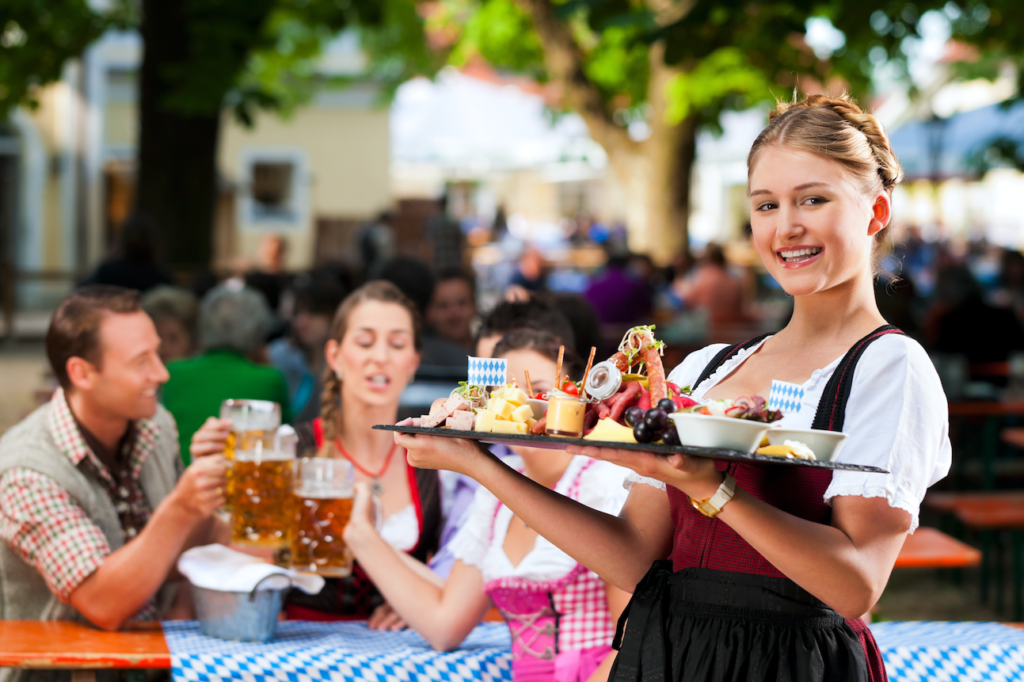
For many tourists, food and drink is an afterthought.  Eating local means non-descript pasta in Italy washed down with some sort of wine… plate after plate of sausages and sauerkraut in Germany with a standard light lager… cone of fries and a Stella Artois in Belgium…

All these things are fine for tourists (except the Stella in Belgium!  c’mon!) if you really have no interest in connecting with the culture and just want to avoid going hungry while you see the sights.  But many travellers want to engage with the local scene and immerse themselves in the region and aren’t sure how to go about this.

If you’re one of those travellers, here are a few suggestions when planning your trip.

  1. Don’t assume there is a “national” cuisine.  Take Italy for example.  The pizza/pasta stereotype for Italy just doesn’t cut it when you look at the huge variety of regional food traditions – the cuisine of the Veneto is not the same as the cuisine of the Alto-Adige or Emilia-Romagna or Liguria or… you see what I’m getting at.  There are plenty of restaurants that cater to tourists that will serve the same basic pizza/pasta throughout Italy.  But to really connect, you want to read about the food culture in the specific region you are visiting, and seek out restaurants that celebrate it!  If Italy is on your list, I would highly recommend reading “Italian Cuisine: A Cultural History” by Capatti and Montanari as you are planning.  It’s not a recipe book, but regional dishes are explained in context.  Highlight the ones that interest you, then find restaurants that specialize in those dishes.
  2. When you are in Europe with no specific plans for your meals that day, take note of restaurants that don’t seem to cater to tourists.  Not on the main squares.  No English menu.  No “tourist menu” (that always makes me laugh – they actually put that on the signs out front of some restaurants!)  No bow-tied pushy waiter standing out front trying to convince you to step inside.  A place where you are mostly hearing the local language, and where ordering might be a bit of an adventure!  If you know a few basic words in the language, and maybe can use your phone to translate anything your are unsure of, you’ll be fine and you’ll probably have one of the most memorable experience of your trip!
  3. More expensive does not necessarily equal better quality.  Many of the best food and drink experiences are the ones that the locals can afford too.  I’ve had plenty of €3 glasses of house wine that suited the food and my palate better than the much more expensive bottles from the restaurant’s cellar.  I’ve had ultra-cheap beer and food in little taverns in rural Germany that completely outshone the expensive meals offered at the hotel restaurant.

If you are interested in letting someone else take care of these details for you – we’re your people!
Eat and Drink Like a European offers the most unique tours in the industry – the best food and drink experiences with a focus on the most interesting history, art, and architecture.  
Delicious Milano!

The typical Milanese cuisine might not be as famous as the Roman or Tuscan, but it’s definitely worth trying: in fact, it includes some of the most delicious food in Italy!

Just like that of the whole region of Lombardy, the Milanese cuisine is made of ancient recipes based on simple ingredients. But as we said, most of its recipes are not that famous outside of this Northern Italian city, so… What to eat in Milan?

When you join us on our Eat and Drink Like a Northern Italian tour, you can be sure that you will taste the best that Milan has to offer!

Aperitivo

An aperitivo before dinner.

Cotoletta alla Milanese

It is a famous meat recipe, very simple and quick to prepare, known all over the world with many variations, but the authentic tasty and crispy veal cutlet is only one, and can be enjoyed only in the city of Milan.

This dish consists of a delicious slice of sirloin breaded veal with egg and breadcrumbs and then fried in butter: a real treat for the palate. The union of the breading fragrance and the meat softness make this dish a must if you are in Milan.

cotoletta alla milanese

Perfectly breaded, crisp and moist cotoletta alla milanese


Risotto alla Milanese

A first course, part of the Italian culinary traditions, that fascinates primarily for its color of gold, for its delicious scent and obviously for its unique taste. One must be careful, however, not to confuse it with the “saffron risotto”: the differences between the two are few but important.

The main ingredient is definitely saffron, but the real traditional Milanese recipe includes the use of beef marrow, fundamental to enrich the taste of the dish, and a dash of white wine. Famous and appreciated all over the world the risotto alla Milanese has a long history of flavors and continues today to be beloved by both the Milanese and tourists.

risotto_alla_milanese_milan_food

The fragrant Risotto alla Milanese


Ossobuco

The ossobuco (literally, the “marrowbone”) can be served as a main dish, but very often it is served accompanied by the risotto alla Milanese (and it is wise and recommended choice). It is a beef steak – with a hole containing the bone in the middle, and it can be cooked in different ways. The softness of this type of meat makes this dish unique and delicate.

In addition to the accompaniment with the risotto, the ossobuco is also excellent along with chopped garlic, parsley and anchovies, or with fried tomatoes and onions.

Ossobuco

Tender, delicious Ossobuco


Cassoeula

The Cassoeula is a winter typical dish of the popular tradition of Lombardy. Its origins are very old, and its recipe has changed a lot over the years, be it has always been beloved.

The main ingredients of cassoeula are cabbage and pork.

The typical Milanese folk dish Cassoeula

The typical Milanese folk dish Cassoeula


Panettone

A historic Milanese dessert, eaten each year throughout Italy especially in the most beautiful time of the year, Christmas. The Milanese Panettone unites the whole table, is the sweet of Christmas and it’s beloved by all, both for its taste and for what it is able to convey emotionally during the Christmas atmosphere.

The origins of panettone are ancient and sometimes fade into legend: it is said that it had been cooked for the first time only with scraps, with what was advanced in the kitchen. Its recipe is simple, it takes a few natural ingredients – flour, baking powder, orange, eggs and the inevitable raisins.  Delicious!

The Christmas treat Panettone

The Christmas treat Panettone

Authentic Food of the Cinque Terre

Want to try some of the best cuisine in Italy?  The food of the Cinque terre is a delight that needs to be sought out and included on any trip to the “Italian Riviera”.  In fact, the food of the Cinque Terre —including pesto genovese, minestrone and focaccia, is a favourite of many frequent travelers to Italy, including me!  Because Liguria is on the coast, seafood and fish are a big part of the diet here, and many of the region’s famous foods and recipes were first invented, or eaten, on ships or by fishermen.

Not a big seafood fan? Don’t worry! The sea breezes and mineral-rich soils mean that the region is also famous for its herbs (especially basil and rosemary), wine, olive oil, pine nuts, porcini mushrooms, and other delicious foods.

Want to make the best of your dining experience while traveling through the Cinque Terre or other parts of Liguria? Here are what food items to look for on the menu!

focaccia

Foccacia

Focaccia: Ah, focaccia! This Ligurian bread has made its way around the world, and it’s no surprise: It’s delicious either on its own, dipped in sauce, or with a spread. A flattened bread (like a pizza without tomato sauce), it’s meant to be eaten hot from the oven. It might be flavored with anything from just olive oil and salt to cheese and sausage. And it’s a street food, so don’t feel as if you have to be sitting down at a restaurant to enjoy it.

Farinata: Another Ligurian street food, farinata is a bread made from chickpea flour. As with focaccia, of course, olive oil and other flavourings (often rosemary or onion) are added in. It’s also best eaten piping-hot and fresh out of the oven.

Latte brusco: Also called “frittura di crema,” this dish involves browning parsley and onion; adding flour, milk and egg yolks; and letting it all cool and harden before dipping it in egg whites, bread crumbs, and deep-frying the whole concoction in olive oil. Eaten hot, it’s a crusty, delicious snack, especially on a cold day!

Carciofi violetti: Rome isn’t the only place famous for its artichokes. Liguria is, too—particularly Albenga. These tender-yet-crunchy artichokes pop up in sauces, pies, and frittate, and you might even see them eaten raw.

re-seafoodstew608

Ciuppin

Minestrone: Legend has it this famous soup was invented in Liguria, although, of course, we can’t be sure. But the story goes that soldiers from Genoa, serving in the First Crusade, made a meal by taking vegetables and herbs from the locals… then cooking them as a soup in their army helmets. Who knows if it’s true, but it’s certainly a fun story!

Ciuppin: Ever heard of “cioppino”? Well, that’s a dish that was developed by Italian immigrants in California in the 19th century—and it’s based on Genoa’s ciuppin. The original version, made up by fishermen on Liguria’s coast, was meant to use up the fish that were too small or damaged for anyone to buy. The fish are slow-cooked for up to two hours, making for a delicious soup. There’s also much less tomato than in the Italian-American version.

Genova_Cappon_Magro_7

Cappon Magro

Cappon magro: This dish looks like a salad… but it’s much more complicated! Hard-tack biscuits (yes, a holdover from Liguria’s seafaring times) are soaked in olive oil and salt water. They’re layered on top in a pyramid (something that takes a fair amount of artistry, and balance, to pull off!) with a mixture of fish, shellfish, olives, and eggs, and dressed with a sauce flavored with anchovies and capers. It’s a traditional dish to eat on Christmas Eve.

Corzetti: What are those funny little discs of pasta?Corzetti, of course! Coming from Genoa, they’re flat, round, and often embossed with a wooden hand-tool—something that not only gives the pasta a bit of decoration, but also lets it hold the sauce better. If you’re in Genoa, look for fresh pasta shops where they still handmake corzetti and stamp them.

Pesto Italy shutterstock_109632971

Pesto alla Genovese

Pesto alla genovese: In short, while there are lots of kinds of pesto in Italy (“pesto” can refer to any paste of herbs that’s mashed up with a mortar and pestle), pesto alla genovese is the most famous. It’s D.O.P. protected, meaning it can only be made in a very precise way, with specific ingredients (including D.O.P. basil from Genoa), to be considered the “real thing.” The ingredients themselves are simple–basil, pine nuts, Parmigiano-Reggiano, Pecorino, garlic, salt, and olive oil—and when it’s done properly, it’s absolutely delicious over penne or another pasta!

Pesto bianco: This is another kind of pesto, literally “white pesto,” that you can find in Liguria (aside from the famed pesto alla genovese!)It’s a paste of walnuts,  olive oil, and fresh ricotta.

Crema ai pinoli: Another pasta sauce from Liguria, this one is made from pine nuts, garlic, butter, and fresh marjoram. It’s especially popular in Genoa, where you’ll often see it on corzetti.

Torta pasqualina

Torta pasqualina

Torta pasqualina: If you like some pastry with your greens, you’ll love this dish. Pastry is layered with a mix of green chard, parmesan, ricotta, and other herbs, and the filling is indented with eggs and butter. The pastry layers are supposed to number 33. Sound random? Each one is for a year of Christ’s life—this dish actually got its start as an Easter tradition, although many people eat it year-round now.

Pacciugo: An ice cream that hails from the area near Portofino, pacciugo includes bitter-chocolate ice cream mixed with whipped cream, fresh fruit, cherries, and a coulis of raspberry or strawberry. It got its start in the 1930s, and became an instant hit, especially with Portofino’s many tourists.

Focaccia castelnovese: A bun made of cornmeal, olive oil, butter, and pine nuts, this is a Christmas and Easter tradition.

Ravioli dolci: Like ravioli, but not! These “sweet ravioli” are envelopes of sweet egg dough, filled with a pesto of citrus peel, candied squash, citron, and beef marrow.

Meringhi genovesi: Cake soaked in rum or another liquor, filled with apricot jam, and topped with vanilla meringue, this is a cake for tose with a serious sweet tooth!

Pandolce-génois

Pandolce

Pandolce: This literally means “sweet bread,” but it’s not what you’re thinking—it is a cake, not offal!  According to legend, the 16th-century Doge of Genoa, Andrea Doria, invited Genovese chefs to submit recipes for a food that would represent the Republic’s wealth, as well as be nutritious, durable and suitable for long sea voyages—and so pandolce was born. It’s dense, crumbly, and filled with spices and candied fruits, and it’s generally eaten only at Christmas.


Eat and Drink Like a European is dedicated to the absolute best in European travel experiences.  All of our tours feature authentic regional cuisine!  We also do travel consulting, and can help you find the places the locals eat on your independent trip to Europe.  Contact our chief tour director Craig Bresett for more information.

[author] [author_image timthumb=’on’]https://pbs.twimg.com/profile_images/506116251454697472/4blfsXiS.jpeg[/author_image] [author_info]This blog shared with you by Craig Bresett (trying not to get Farinata crumbs in my keyboard) – owner and chief tour director at Eat and Drink Like a European. Contact Craig anytime: craig@eatanddrinklikeaeuropean.com[/author_info] [/author]

The #1 time saving tip when travelling in Europe

Paris Metro

Commuters and tourists heading into central Paris on the Metro.

You’re booking your dream trip to Paris, and like most people, you are on a budget.  So you search hotels based on price.  You find what looks like a great deal, book it, fly to Paris, and arrive at your hotel only to find out that it’s not even close to Notre Dame or the Louvre or the Eiffel Tower – in fact, it’s not even within the Boulevard Périphérique (the ring road that surrounds Paris proper).  No matter, you think,  you can just use the metro to get into town.  But now you’re squeezed onto the train every morning at rush hour with all the commuters, and three transfers and an hour later you’re in the area that you came to visit in the first place.  Heading back to the hotel for a mid-afternoon post wine-for-lunch nap isn’t feasible.  And you’ve still got that same ride back to your hotel in the evening.  Those slightly more expensive hotels in the city centre aren’t looking like such a bad deal anymore.

Notre Dame Hotel

A great view from your hotel can be another benefit of staying in the city centre

Your number one consideration when choosing accommodations in Europe should be location.


Regardless of what city or town you are visiting, you will find that there are always cheaper accommodations outside of the historic centre.  But add in the cost of getting into the centre and your deal isn’t quite as good (for example, you could choose to stay in a cheap hotel in Mestre and take the vaporetto (water bus) into Venice everyday –  but that’s €7.50 each way!).  Plus you miss out on the night time ambience European cities are so famous for.

Your number one consideration when choosing accommodations in Europe should be location.  With some work, you should be able to find something suitable to your price range in a great neighbourhood in the city centre.  Search for hotels by location first, then by price.  Check walking distances on Google maps from the hotel to museums, churches, restaurants, etc. Being able to walk out of your hotel into the Europe you came to visit is worth a few more euros a day.

Siena Evening

An evening stroll near your centrally located hotel is an uncrowded joy in most European towns and cities, like Siena (pictured).

OneLife Tours is dedicated to the absolute best in European travel experiences.  Unlike the big box tour companies, all of our tours feature centrally located hotels giving our guests the best value for their money.  We also do travel consulting, and can help you find the ideal accommodations for your independent trip to Europe.  Contact our chief tour director Craig Bresett for more information.

[author] [author_image timthumb=’on’]https://pbs.twimg.com/profile_images/506116251454697472/4blfsXiS.jpeg[/author_image] [author_info]This blog reverently shared with you by Craig Bresett – owner and chief tour director at OneLife Tours. Contact Craig anytime: craig@onelifetours.ca[/author_info] [/author]

Is the Blood of Christ in Europe?

Relics have long been part of many religious traditions, and indeed Europe is brimming with churches and cathedrals built to venerate literally thousands of these precious remnants of martyrs and saints.  In Bruges, Belgium, there is a relic sacred above all others – a vial containing what many believe to be a cloth stained with the blood of Jesus Christ.  How did it get there?

Thierry of Alsace Holy Blood

Thierry of Alsace presents the vial with the Holy Blood to the people of Bruges

basilica of holy blood inside

The brightly painted interior of the basilica

According to the Apocryphal Gospels, Joseph of Arimathea had preserved the cloth with the Precious Blood after he washed the dead body of Christ.  The story is that in 1150, Thierry of Alsace, the Count of Flanders, returned to Bruges with the vial – a gift that had been given to him by the king of Jerusalem during the 2nd Crusade.  The private chapel of the count was expanded to properly house this sacred relic and allow visitations, which continue to this day in the Basilica of the Holy Blood.  During the Middle Ages, the relic was apparently responsible for dozens of miracles, and perhaps most miraculously the blood was said to change from dried to liquid form every Easter.

Because of the importance of the relic, the city decided long ago to celebrate it in a very public way – every Ascension Day (May 5 in 2016) since the Middle Ages Bruges hosts the Procession of the Holy Blood.  The Relic is placed in a grand reliquary, and paraded around the city with clergy and laypeople alike dressed in fine medieval costumes.

Holy Blood Procession

The Procession of the Holy Blood takes place every Ascension Day

If you can’t be there on Ascension Day, no need to worry – you can visit the relic in the basilica.   The church itself is quite impressive – the original dark romanesque chapel on the ground floor remains, stark and usually empty, with stairs leading up to the expanded gothic upper chapel.  The inside of the upper chapel is vibrantly painted.  Interestingly, most of the gothic churches in Europe were painted to begin with, but time has worn away the colours and left us with the familiar grey stone.  But here in Bruges, you can experience the inside of a gothic church the way the original designers intended, bathed in vivid hues.  The relic itself is kept in a side chapel – when you enter just walk straight along the back of the main chapel and you’ll see the reliquary on a raised platform with stairs leading up one side and down the other.

So is this really the blood of Christ?  I don’t know if it really matters…  Whether you are religious or not, allow yourself to be enthralled by this most sacred of relics in this most beautiful of Belgian cities!

For the modern visitor, the Basilica is open 9:30 am – 12:00 pm and 2:00 – 5:00 pm most days – though sometimes access to the upper chapel (where the vial is usually on display) is closed as they have regular church services there.  Best thing to do is check in the morning.

Contact the Basilica of the Holy Blood: www.holyblood.com Burg 13, 8000 Brugge, Belgium+32 50 33 67 92

Holy Blood Basilica

The rather small entrance to the basilica on the Burg Square with entrances to both the romanesque ground floor chapel and the gothic upper chapel.

OneLife Tours is dedicated to the absolute best in European travel experiences.  Both our Grand Tour of Europe  and our Ultimate Beer Tour start in Bruges, and a guided visit to the Basilica of the Holy Blood is of course one of the many highlights of our stay there.  Contact our chief tour director Craig Bresett for more information.

[author] [author_image timthumb=’on’]https://pbs.twimg.com/profile_images/506116251454697472/4blfsXiS.jpeg[/author_image] [author_info]This blog reverently shared with you by Craig Bresett (enjoying a Brugse Zot at this very moment) – owner and chief tour director at OneLife Tours. Contact Craig anytime: craig@onelifetours.ca[/author_info] [/author]

Rust Never Sleeps

The Eiffel Tower, that accidental icon of Paris, is under constant threat, and the armed soldiers walking around the base are doing nothing to stop it.  Though their presence is accepted and appreciated by visitors and Parisians alike, the threat I’m talking about is perpetual and cannot be warded off by security measures.

The Eiffel Tower is constructed of puddle iron.  Puddle iron’s natural enemy is rust.  And, as Neil Young so poetically stated –  Rust Never Sleeps.  Gustave Eiffel, the tower’s eponymous builder, knew this to be the case, and pointed out back in 1900 that the real saviours of the tower would be the painters.  “We will most likely never realize the full importance of painting the Tower, that it is the essential element in the conservation of metal works and the more meticulous the paint job, the longer the Tower shall endure.”


Screenshot 2015-08-15 13.20.30

Safety standards sure have changed since 1932!

Since it’s initial construction, the Eiffel Tower has be re-painted 18 times – about once every 7 years.  It has changed colour several times, passing from red-brown to yellow-ochre, then to chestnut brown and finally to the bronze of today, slightly shaded off towards the top to ensure that the colour is perceived to be the same all the way up as it stands against the Paris sky. Sixty tons of paint are necessary to cover the Tower’s surface, as well as 50 kilometers of security cords, 5 acres of protection netting, 1500 brushes, 5000 sanding disks, 1500 sets of work clothes…and more than a year for a team of 25 painters to paint the Tower from top to bottom.

Probably the most amazing thing about the preservation work on the Tower is that it is done in the same way today (last painting was 2009) as it was when it was first built.  No sprayers are used – the entire structure is painted by hand!  Today the painters hang from safety harnesses and work their way meticulously (as Eiffel demanded) over every square inch of the structure with their brushes. Notice in the black and white photos the lack of safety equipment in earlier days though.

So here’s to the painters – who ensure that this monument to human ingenuity and icon of Paris remains stable, safe, and open to the public!

o-EIFFEL2-facebook

Modern methods involve a lot more safety features, but the essential job of painting the structure by hand remains the same.

OneLife Tours is dedicated to the absolute best in European travel experiences.  Our Grand Tour of Europe features 3 days in Paris, and of course a visit up the Eiffel Tower (without the lineups).  Contact our chief tour director Craig Bresett for more information.

[author] [author_image timthumb=’on’]https://pbs.twimg.com/profile_images/506116251454697472/4blfsXiS.jpeg[/author_image] [author_info]This blog happily shared with you by Craig Bresett (getting ready to re-paint my porch railing) – owner and chief tour director at OneLife Tours. Contact Craig anytime: craig@onelifetours.ca[/author_info] [/author]