Archive for category: Germany

Augustiner Keller – A Party Every Night in Munich

The Augustiner Keller has been around since the early 19th century in one form or another.  Despite being built next to the old execution grounds for the city of Munich, it’s always been party central.  I like to think that maybe the condemned got to stop by for a maß and a pretzel before the end.  Today, with an expansive outdoor beer garden, a large festive hall and a cellar bar and restaurant, it can accommodate thousands of hungry and thirsty locals and visitors alike.  One of the highlights is watching the barmen tap the huge wooden kegs to keep the beer flowing.  Many of the friendly waitstaff have a great sense of humour – ask one of them if you can get a beer in any size smaller than a litre (a maß) and prepare to be playfully insulted!
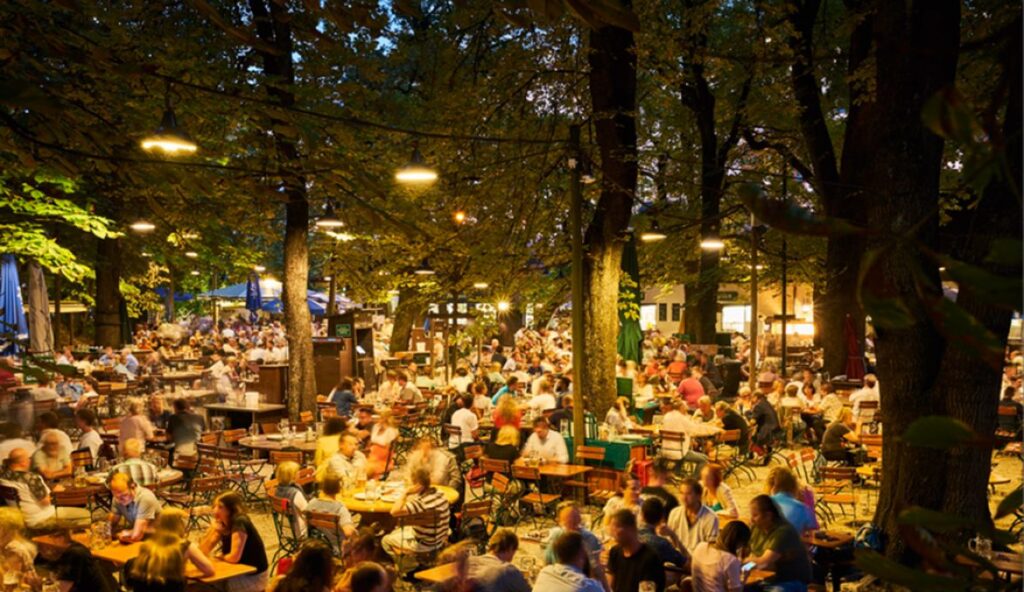
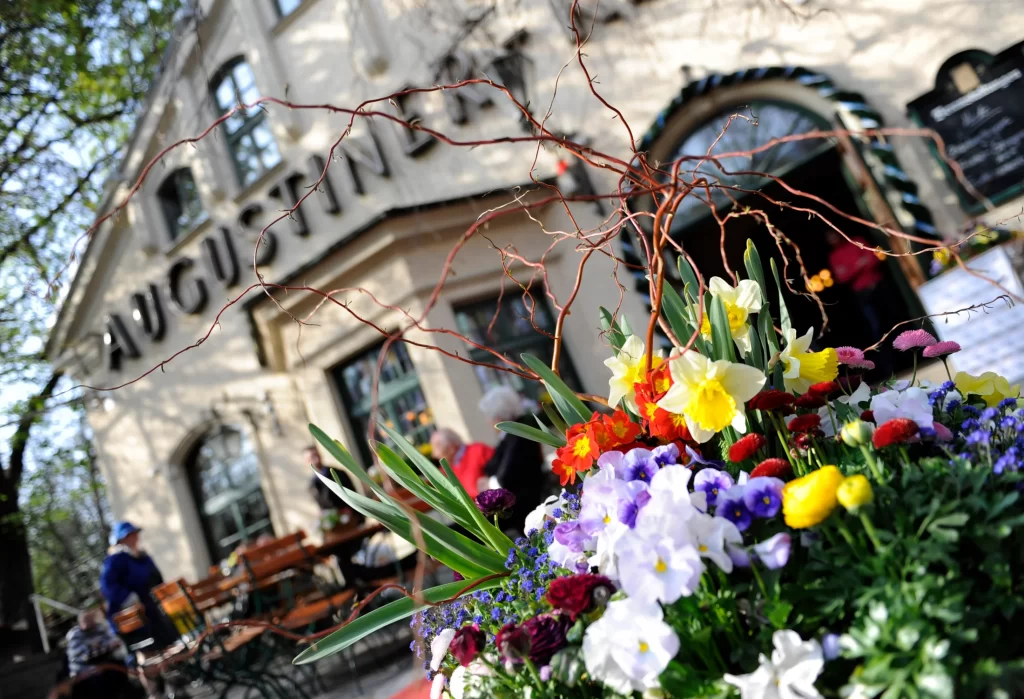
Our Ultimate Beer Tour members always rave about the time they spend at Augustiner Keller. Maybe it’s time for you to join us!
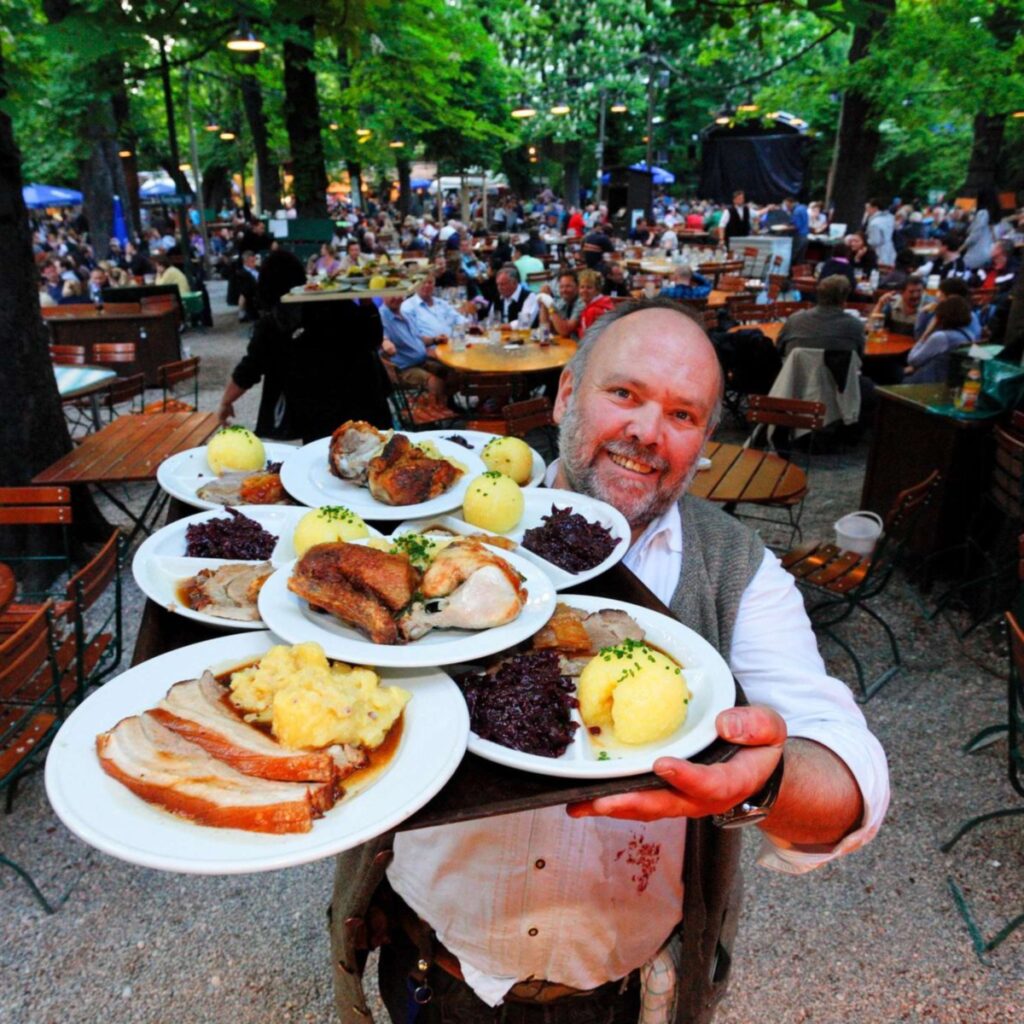
Augustiner Keller

Christmas Markets of Germany

Nobody does Christmas like the Germans, and for good reason.  All over German speaking Europe,but especially in Bavaria, the tradition of the Christkindlmarkt (Christmasmarket) goes back 700 years.  In town squares throughout Germany right now, local craftsmen and merchants are setting up Christmas markets as they have done since the middle ages.  

Warming up with some mulled wine in Berlin

Unlike our modern “Black Friday” Walmart riots, the traditional Christmas market is a peaceful shopping experience where you can buy unique hand-made crafts, sip mulled wine, and enjoy good music.  And there is an unapologetic focus on the spirit of the season, and on the Christ child – Christkindlmarkt literally means “Christ child” market.  It was actually the German Protestant reformer Martin Luther who decreed that gifts should be given on Christmas Day in celebration of the birth of the Christ child rather than on St. Nicholas’ Day (Dec. 6) as had been the tradition. 

With a central nativity display (an imported tradition from medieval Italy – details in a future blog) and a beautifully decorated Tannenbaum (Christmas tree – a German original), the Christmas market is an oasis of light and love for locals and visitors alike.

Choosing the right ornament in Nuremberg.


Rothenburg ob der Tauber, a walled medieval town on Bavaria’s Romantic Road,attracts visitors from all over the world to its Christmas market.  The town itself is a beauty all year round, but with a light dusting of snow and the ambiance of the market, it becomes irresistible.  And even if you don’t visit during the Christmas season, you can experience it year-round in the seemingly endless rooms of the Käthe Wohlfahrt store across the street from city hall.  The store offers every conceivable Christmas ornament, decoration, doll, window display… you’ve never seen anything like it!

The grandeur of the the Cologne Cathedral (a featured stop on our Ultimate Beer Tour) is the perfect backdrop for the annual Christmas Market.

Deep within the store is the Rothenburg Christmas Museum – 2700 square feet of Christmas history that will have even the youngest visitor nostalgic for the“old days”.  A visit to the museum evokes a light-heartedness, a feeling of warmth and goodwill, with none of the “stresses” of our modern holiday, even in July!  I’ve seen many of my tour members walk out of the museum into a warm midsummer Rothenburg street humming “Silent Night” and pining for cold air and hot chocolate! 

Inside the cavernous Käthe Wolfahrt shop in Rothenburg.

The five BIG BAVARIAN foods you need to eat

Bavarians don’t just eat beer.  They also eat food.  And it is some of the heartiest, earthiest, heaviest food in Europe.  Heavy in a good way, like an anchor that keeps you from floating away from the beer garden.  Here to make your mouth water, are 5 traditional foods you need to eat when visiting Munich or anywhere else in Germany’s fun province, Bavaria.

Weisswurst and Pretzel:  Hey, it’s breakfast time in Bavaria, so you’re obviously enjoying a Weißbier (a cloudy, slightly sweet wheat beer).  You need something solid to go with it.  Do as the Germans do, and enjoy at weisswurst (white sausage).  Looking a little different than your typical North American breakfast sausage, and boiled instead of fried, it’s a nice “light” (by Bavarian standards) way to start the day.  With a pretzel, please.

CG9-LouVIAE7N5q

President Obama recently shared a traditional weisswurst breakfast with German Chancellor Angela Merkel.

Weißwurst-1

Weisswurst is typically eaten with mustard and a pretzel.


Käsespätzle:  Please, don’t call this mac n cheese.  That’s for kids.  Käsespätzle is for grownups, made with small twisty dumplings, emmenthaler cheese, and onion.  Not a hint of orange food colouring in sight.

spaetzle

Please sir, may I have some more?


Schnitzel:  Apparently, you can schnitzel pretty much anything.  Though veal is the most common member of the schnitzel family, there’s pork, there’s chicken… I’ve even had fish schnitzel.  The process is quite simple.  Take your slab of meat, pound the heck out of it, bread it, deep fry it, and eat it.  Food doesn’t get much “heavier” than that!

Wiener-Schnitzel02

What’s the salad for?

Schweinshaxe: No, that’s not the name of a German metal band (though maybe it should be).  This is the grand-daddy of all Bavarian cuisine.  Alternatively called “pork knuckle” or “ham hock”, this is big food. Tuck into one of these for lunch, you won’t be needing dinner.  Takes some serious effort to eat – this is a real food experience.

schweinshaxe-wirsing-gemuese

I don’t recommend trying to eat two of these at one sitting.

Did I miss your favourite Bavarian food?  Let me know in the comments!
OneLife Tours is dedicated to the absolute best in European travel experiences for our small groups.  If you want your travel in Europe to include authentic, mouth-watering, local cuisine, sign up for one of our unique tours today!

[author] [author_image timthumb=’on’]https://pbs.twimg.com/profile_images/506116251454697472/4blfsXiS.jpeg[/author_image] [author_info]This blog happily shared with you by Craig Bresett (trying not to get Käsespätzle on my keyboard) – owner and chief tour director at OneLife Tours. Contact Craig anytime: craig@onelifetours.ca[/author_info] [/author]

Tower or Dungeon?

Where would you rather be, in a tower or in a dungeon?  Well if you travel to Germany’s Rothenburg ob der Tauber, you can certainly try both.  Rothenburg o.d.T. (not to be confused with numerous other Rothenburgs in Europe) is a quintessentially Bavarian town, with all the cobblestones, half-timbered houses, beer and sausages one would expect in this part of Germany.  But more than that, it is a living museum of a glorious past.


Rothenburg used to be a Free Imperial City of the Holy Roman Empire – meaning it had essentially broken away from any larger kingdoms or overlords and been given a charter to operate as an independent city state.  This allowed for great prosperity to develop within the still-intact town walls, while much of the rest of Europe continued to wallow in the economic quagmire of feudalism.  But all things must pass, and Rothenburg’s Golden Age had to come to an end.

As with other well-preserved medieval towns (Bruges comes to mind), Rothenburg’s centuries-old economic collapse was the modern traveler’s gain.  After narrowly averting total destruction during the 30 Years War, apparently due to the local mayor’s ability to down a lot of wine (I’ll save that story for another blog), Rothenburg kind of fell off the economic map of the German territories as trade routes shifted.  So instead of undergoing a series of renovations to keep the town “modern”, the impoverished citizens had to settle with living in their medieval buildings in relative obscurity until the age of Romanticism in the mid 19th century started bringing in tourists looking for some romanticized ideal of medieval life.  And they haven’t stopped coming since.

So now, when you visit Rothenburg, among other medieval/Bavarian activities, you can climb down the stairs to the dungeon in the Kriminal Museum and contemplate the many creative ways our ancestors came up with to torture, uh, our other ancestors.  Or you can climb the Rathausturm (townhall tower) and squeeze through what is possibly the smallest door in Europe to access what is possibly the smallest balcony in Europe.  But the views are grand!  Me, I’d do both.
Rothenburg Germany Town Hall shutterstock_2190557Above: (TOWER)  The white tower of the town hall does what a tower is supposed to do and towers over the city centre.  From the top you can survey not only the whole town but the beautiful Bavarian countryside surrounding it.

Below: (DUNGEON) The Kriminal Museum actually covers 4 floors and is the best collection of implements relating to the medieval justice system anywhere in Europe.  But you get to start your tour in the dungeon.
Screenshot 2015-07-02 14.53.48

Practical Info:
The Kriminal Museum – Hours:  10 AM to 6 PM May to October; varies the rest of the year.  Cost: €5 Adults, €3 kids (and kids love this place!) Address: Burggasse 3, 91541 Rothenburg ob der Tauber, Germany Phone:+49 9861 5359
Rathausturm – Hours: 9:30 AM to 12:30 PM / 1:00 PM to 5:00 PM April to October.  Closed in winter.  Cost:  A measly €2 (pay near the top).  Go for it!  Address – Just go to the Market Square and look up.  Entrance to the tower, somewhat confusingly, is through the town hall door facing the Market Square.
OneLife Tours is dedicated to the absolute best in European travel experiences for our small groups.  And Rothenburg ob der Tauber is a much-loved stop on our popular Grand Tour of Europe.  Join us in dungeons and towers alike!


[author] [author_image timthumb=’on’]https://pbs.twimg.com/profile_images/506116251454697472/4blfsXiS.jpeg[/author_image] [author_info]This blog happily shared with you by Craig Bresett (while sitting in a dungeon to get out of the heat, let it be known) – owner and chief tour director at OneLife Tours. Contact Craig anytime: craig@onelifetours.ca[/author_info] [/author]

Discovering Great Art With An Emotional Punch

Art can speak to us in profound ways, moving us emotionally, intellectually, and even spiritually. Europe is filled with countless artistic masterpieces worthy of your time and attention. Part of the joy of exploring Europe’s art is discovering those pieces that speak to you personally. What evokes this connection is unique to each person and difficult to predict, however we think the following works are worth checking out—and will hopefully provide some inspiration for you to discover new ones of your own. 


Stained Glass Windows, Saint Stephan’s Church, Marc Chagall. Mainz, Germany. 

The experience is aesthetically arresting; blue light filtering through the stained glass bathes the church’s interior. The scene’s subject matter is biblical in origin—Adam and Eve, Moses, angels, scenes from the natural word. However the style is thoroughly modern with the unmistakeable flourish of Chagall—colorful, whimsical, mystical. 

After the atrocities of WWII, Chagall, a Jew, spent three years considering whether to work with this Catholic church in Germany. He finally agreed sensing an opportunity for reconciliation. The scenes he so beautifully portrays are made all the more poignant in the context of the suffering and hope that went into their creation.


Wheatfield with Crows, Vincent Van Gogh. Van Gogh Museum, Amsterdam, Netherlands. 

Standing in front of this work, thought by may to be his last, Van Gogh’s brilliance—and madness—are undeniable. A brooding sky of dark blue and black contrasts with the bright yellow field; a pathway leads into the distance. Black birds hovering above provide a sense of movement and foreboding. The visuals are stunning, but the real power of this piece comes from contemplating the man behind the masterpiece and the final glimpse we get into his psyche. 


Holocaust Memorial, Peter Eisenman. Berlin, Germany. 

This outdoor monument is a must-do experience when in Berlin. The concept is simple: a large field of raised rectangular concrete columns rise upward, creating a criss-crossing network of pathways. As one walks towards the center of the exhibit the floor slopes downward while the columns extend upward until one is lost in a forest of concrete. Reminiscent of tombs, the countless columns create a tangible reminder of the scale of this tragedy. Walking through these a visceral sense of isolation results, first physical and then emotional. This is an extremely well designed installation, creating ample opportunity for one to reflect on this most horrendous chapter of Europe’s history. 


Pieta, Michelangelo. Saint Peter’s Basilica, Rome, Italy. 

In this exquisite sculpture Michelangelo breaks from convention, portraying a youthful, beautiful Mary—instead of the usual, more sedate version. While there are countless sculptures depicting this scene of Mary and Jesus, Michelangelo’s rendition is particularly poignant. Undoubtedly his raw talent is a factor, as was Michelangelo’s own hope to depict a “religious vision of abandonment and a serene face of the son.” We’re not the only ones to be moved by this piece. In 1972 a mentally disturbed archeologist chipped off Mary’s nose. The fragment was never found so the repair was made using a piece of marble taken from Mary’s back. The sculpture now rests behind bullet-proof glass.

What pieces of art have made an impression on you? We’d love to hear about your favorites! 

"You don't even have a tan"

Upon return from one of my trips to Europe in 2012, a neighbour asked me, “So what do you do when you’re over there?  I mean, you don’t even have a tan.”
I actually did have some colour from hiking under the warm Italian sun in the Dolomites and along the Mediterranean coast.  And I even went swimming and spent some time on the beach while visiting the Cinque Terre.  But my goals in traveling to Europe are not related to acquiring a tan, and I had not put any conscious effort into deepening my pigmentation.
My neighbour has not been to Europe.  She has been to Mexico.  Multiple times.  I believe to the same resort.  And Hawaii.  And she, of course, comes back with a deep tan, as well as a sense of satisfaction and a relaxed demeanor.
I think when I come back from a trip, I definitely share that sense of satisfaction in time well spent, but I think my demeanor is usually one of excited anticipation – of sharing stories and photos (and beer and chocolate for the lucky ones) with friends and colleagues, and of, well, planning my next trip!
So when she asked me the question about what I do when I’m in Europe, she got a long and enthusiastic answer from this admittedly jet-lagged Europhile.  I talked about meeting new people, trying new Belgian brews, searching for a winery in the hills of Tuscany, walking lopsided out of the Leaning Tower of Pisa, cycling along canals past windmills, quiet moments of reflection in 800 year old cathedrals, being overwhelmed by the magnificent beauty of Botticelli’s Birth of Venus, eating the freshest most flavourful pesto anyone has ever had anywhere at any time in a little restaurant in a little village on the west coast of Italy… and on and on and on.
Her response: “Wow, you must come back from vacation more worn out than when you left!”
True, my “vacations” are not really relaxing.  And most of the time when I’m overseas, I’m actually working (to provide a stress-free vacation for the people who are traveling with me) not vacationing.  But I’m not tired out when I come back.  I’m energized and invigorated.  And I can’t wait to go again.

Have it all on your next vacation – Europe’s got history, art, architecture, food and drink, great people, and even a few beaches where you can work on your tan if that’s what you like!  This is Vernazza in the Cinque Terre region of Italy – part of the Grand Tour.

Christmas in Europe: German Christkindlmarkt

 Nobody does Christmas like the Germans, and for good reason.  All over German speaking Europe, but especially in Bavaria, the tradition of the Christkindlmarkt (Christmas market) goes back 700 years.  In town squares throughout Germany right now, local craftsmen and merchants are setting up Christmas markets as they have done since the Middle Ages.  

–>

You can warm up with some Glühwein (mulled wine) like your medieval ancestors did at Munich’s annual Christmas Market.
Unlike our modern “Black Friday” Walmart riots, the traditional Christmas market is a peaceful shopping experience where you can buy unique hand made crafts, sip mulled wine, and enjoy good music.  And there is an unapologetic focus on the spirit of the season, and on the Christ child – Christkindlmarkt literally means “Christ child” market.  It was actually the German protestant reformer Martin Luther who decreed that gifts should be given on Christmas Day in celebration of the birth of the Christ child rather than on St. Nicholas’ Day (Dec. 6) as had been the tradition. 
Friendly Liselotte Groemer has been selling handpainted christmas ornaments at the Nuremburg Christmas Market since the 1950’s.
The Christmas pickle ornament – a unique German tradition. 

With a central nativity display (an imported tradition from medieval Italy – details in a future blog) and a beautifully decorated Tannenbaum (Christmas tree – a German original), the Christmas market is an oasis of light and love for locals and visitors alike.
Beautiful hand made nativity scenes are on display and on sale – reminding visitors of the “reason for the season”.

Rothenburg ob der Tauber, a walled medieval town on Bavaria’s Romantic Road, attracts visitors from all over the world to its Christmas market.  The town itself is a beauty all year round, but with a light dusting of snow and the ambiance of the market, it becomes irresistible.  And even if you don’t visit during the Christmas season, you can experience it year round in the seemingly endless rooms of the Käthe Wohlfahrt store across the street from city hall.  The store offers every conceivable Christmas ornament, decoration, doll, window display… you’ve never seen anything like it!
Bordered by the town hall (on the left) and councilors’ tavern (on the right), the Rothenburg Christmas Market is an annual tradition going back to medieval times when these buildings were constructed.
Deep within the store is the Rothenburg Christmas Museum – 2700 square feet of Christmas history that will have even the youngest visitor nostalgic for the “old days”.  A visit to the museum evokes a lightheartedness, a feeling of warmth and goodwill, with none of the “stresses” of our modern holiday, even in July!  I’ve seen many of my tour members walk out of the museum into a warm midsummer Rothenburg street humming “Silent Night” and pining for cold air and hot chocolate!  
Below – American travel guru Rick Steves explores the Rothenburg Christmas Museum
 
Come and celebrate year-round Christmas on OneLife Tours’ Grand Tour of Europe.  It includ
es a two night stay in romantic Rothenburg – join us!

From outside the town walls, Rothenburg looks like the setting of a fairy tale, whatever the season!