Archive for month: August, 2015

The #1 time saving tip when travelling in Europe

Paris Metro

Commuters and tourists heading into central Paris on the Metro.

You’re booking your dream trip to Paris, and like most people, you are on a budget.  So you search hotels based on price.  You find what looks like a great deal, book it, fly to Paris, and arrive at your hotel only to find out that it’s not even close to Notre Dame or the Louvre or the Eiffel Tower – in fact, it’s not even within the Boulevard Périphérique (the ring road that surrounds Paris proper).  No matter, you think,  you can just use the metro to get into town.  But now you’re squeezed onto the train every morning at rush hour with all the commuters, and three transfers and an hour later you’re in the area that you came to visit in the first place.  Heading back to the hotel for a mid-afternoon post wine-for-lunch nap isn’t feasible.  And you’ve still got that same ride back to your hotel in the evening.  Those slightly more expensive hotels in the city centre aren’t looking like such a bad deal anymore.

Notre Dame Hotel

A great view from your hotel can be another benefit of staying in the city centre

Your number one consideration when choosing accommodations in Europe should be location.


Regardless of what city or town you are visiting, you will find that there are always cheaper accommodations outside of the historic centre.  But add in the cost of getting into the centre and your deal isn’t quite as good (for example, you could choose to stay in a cheap hotel in Mestre and take the vaporetto (water bus) into Venice everyday –  but that’s €7.50 each way!).  Plus you miss out on the night time ambience European cities are so famous for.

Your number one consideration when choosing accommodations in Europe should be location.  With some work, you should be able to find something suitable to your price range in a great neighbourhood in the city centre.  Search for hotels by location first, then by price.  Check walking distances on Google maps from the hotel to museums, churches, restaurants, etc. Being able to walk out of your hotel into the Europe you came to visit is worth a few more euros a day.
Siena Evening

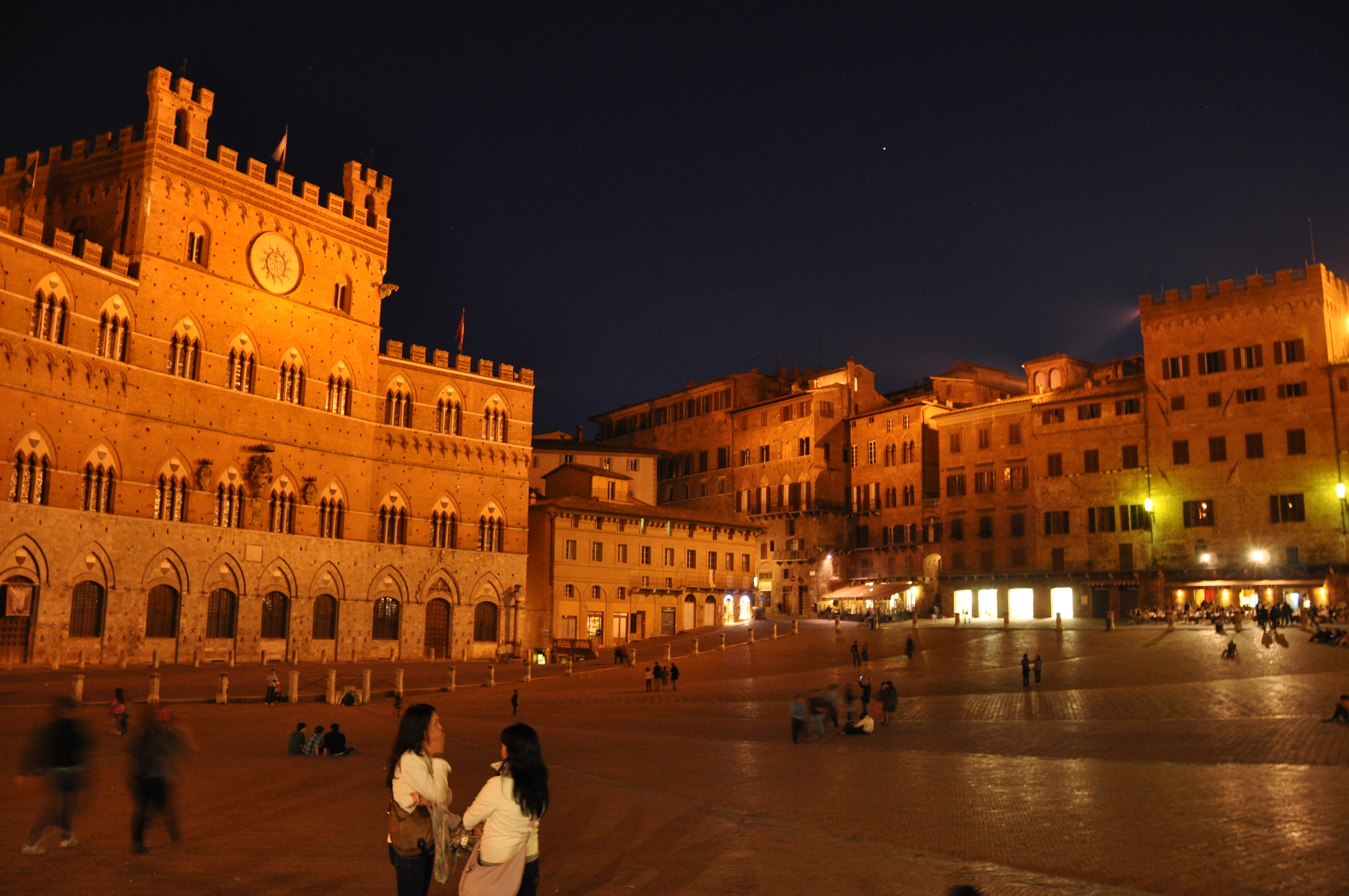
An evening stroll near your centrally located hotel is an uncrowded joy in most European towns and cities, like Siena (pictured).

OneLife Tours is dedicated to the absolute best in European travel experiences.  Unlike the big box tour companies, all of our tours feature centrally located hotels giving our guests the best value for their money.  We also do travel consulting, and can help you find the ideal accommodations for your independent trip to Europe.  Contact our chief tour director Craig Bresett for more information.

[author] [author_image timthumb=’on’]https://pbs.twimg.com/profile_images/506116251454697472/4blfsXiS.jpeg[/author_image] [author_info]This blog reverently shared with you by Craig Bresett – owner and chief tour director at OneLife Tours. Contact Craig anytime: craig@onelifetours.ca[/author_info] [/author]
Is the Blood of Christ in Europe?

Relics have long been part of many religious traditions, and indeed Europe is brimming with churches and cathedrals built to venerate literally thousands of these precious remnants of martyrs and saints.  In Bruges, Belgium, there is a relic sacred above all others – a vial containing what many believe to be a cloth stained with the blood of Jesus Christ.  How did it get there?

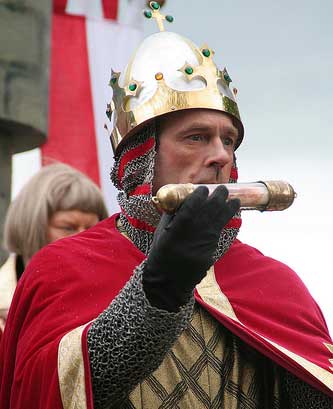
Thierry of Alsace Holy Blood

Thierry of Alsace presents the vial with the Holy Blood to the people of Bruges

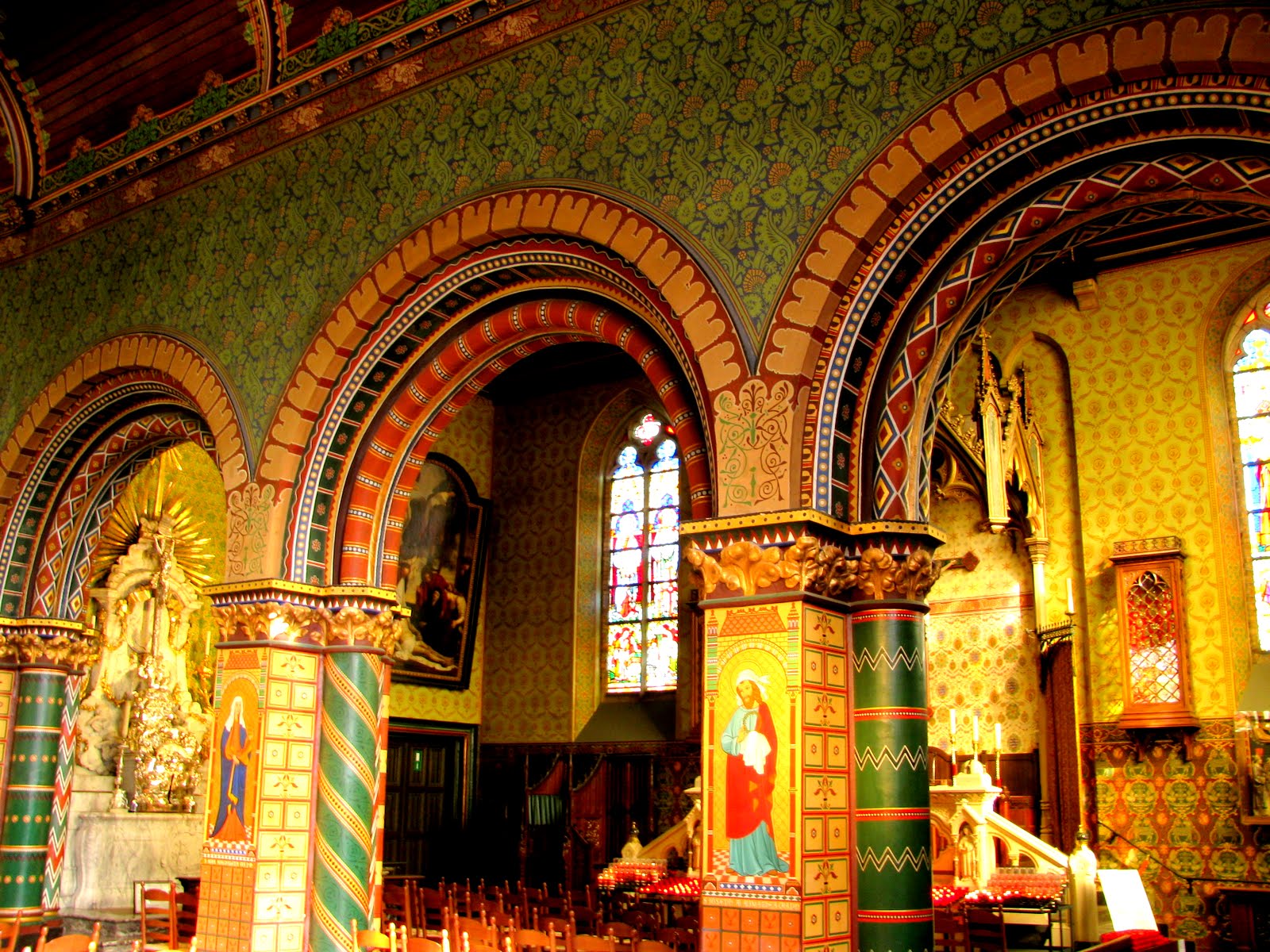
basilica of holy blood inside

The brightly painted interior of the basilica

According to the Apocryphal Gospels, Joseph of Arimathea had preserved the cloth with the Precious Blood after he washed the dead body of Christ.  The story is that in 1150, Thierry of Alsace, the Count of Flanders, returned to Bruges with the vial – a gift that had been given to him by the king of Jerusalem during the 2nd Crusade.  The private chapel of the count was expanded to properly house this sacred relic and allow visitations, which continue to this day in the Basilica of the Holy Blood.  During the Middle Ages, the relic was apparently responsible for dozens of miracles, and perhaps most miraculously the blood was said to change from dried to liquid form every Easter.

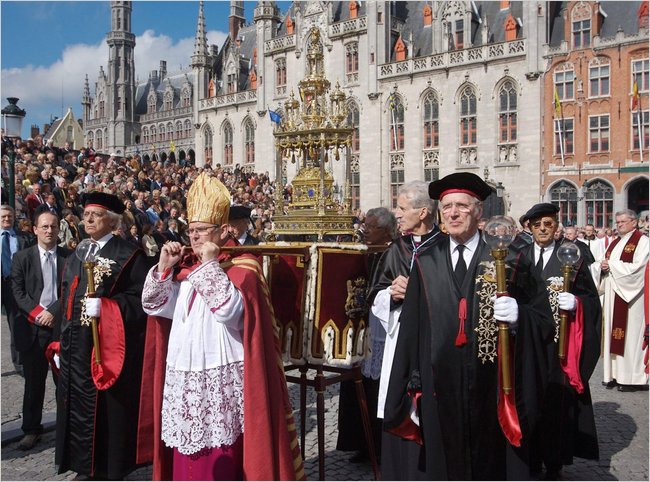
Because of the importance of the relic, the city decided long ago to celebrate it in a very public way – every Ascension Day (May 5 in 2016) since the Middle Ages Bruges hosts the Procession of the Holy Blood.  The Relic is placed in a grand reliquary, and paraded around the city with clergy and laypeople alike dressed in fine medieval costumes.

Holy Blood Procession

The Procession of the Holy Blood takes place every Ascension Day

If you can’t be there on Ascension Day, no need to worry – you can visit the relic in the basilica.   The church itself is quite impressive – the original dark romanesque chapel on the ground floor remains, stark and usually empty, with stairs leading up to the expanded gothic upper chapel.  The inside of the upper chapel is vibrantly painted.  Interestingly, most of the gothic churches in Europe were painted to begin with, but time has worn away the colours and left us with the familiar grey stone.  But here in Bruges, you can experience the inside of a gothic church the way the original designers intended, bathed in vivid hues.  The relic itself is kept in a side chapel – when you enter just walk straight along the back of the main chapel and you’ll see the reliquary on a raised platform with stairs leading up one side and down the other.

So is this really the blood of Christ?  I don’t know if it really matters…  Whether you are religious or not, allow yourself to be enthralled by this most sacred of relics in this most beautiful of Belgian cities!

For the modern visitor, the Basilica is open 9:30 am – 12:00 pm and 2:00 – 5:00 pm most days – though sometimes access to the upper chapel (where the vial is usually on display) is closed as they have regular church services there.  Best thing to do is check in the morning.

Contact the Basilica of the Holy Blood: www.holyblood.com Burg 13, 8000 Brugge, Belgium+32 50 33 67 92

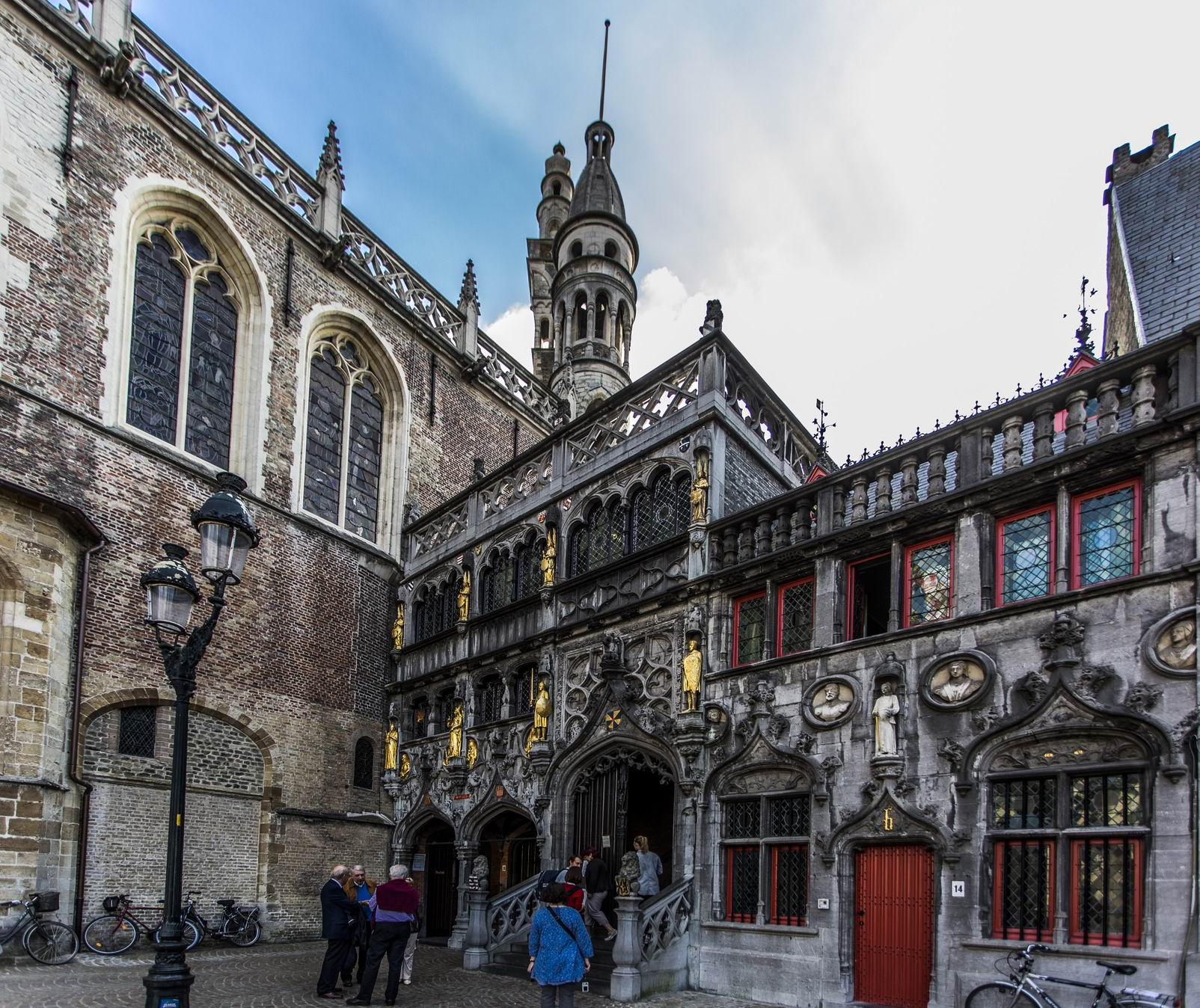
Holy Blood Basilica

The rather small entrance to the basilica on the Burg Square with entrances to both the romanesque ground floor chapel and the gothic upper chapel.

OneLife Tours is dedicated to the absolute best in European travel experiences.  Both our Grand Tour of Europe  and our Ultimate Beer Tour start in Bruges, and a guided visit to the Basilica of the Holy Blood is of course one of the many highlights of our stay there.  Contact our chief tour director Craig Bresett for more information.

[author] [author_image timthumb=’on’]https://pbs.twimg.com/profile_images/506116251454697472/4blfsXiS.jpeg[/author_image] [author_info]This blog reverently shared with you by Craig Bresett (enjoying a Brugse Zot at this very moment) – owner and chief tour director at OneLife Tours. Contact Craig anytime: craig@onelifetours.ca[/author_info] [/author]
7 simple tips to "café" like a pro in Paris

I know café is not really a verb.  But I’m choosing to ignore that.

So how does one “café” in Paris?  Follow these 7 simple tips from the Paris Tourist Office and your waiter might not even realize you’re a tourist (unlikely, but possibly!).

1. There’s no rush. Drinks are priced to allow you to take your time at the table, chatting with friends, people-watching, reading a newspaper, writing notes or postcards. The waiter won’t harry you. One cup of coffee allows you to sit at the table for quite a long time, but probably not all day.

2. Smoking is prohibited inside all cafés and restaurants, but not at open-air tables. Depending on the breeze, smoke from outside tables can waft into the café. If you’re particularly sensitive to tobacco smoke, choose your table accordingly. This particular little annoyance needs attention, not least because it means that non-smokers are obliged to sit inside, even on a hot and muggy day. Still, it’s a marked improvement on the days when, if you asked for a non-smoking table inside a restaurant, you could well end up just a foot from a ‘smoking’ table.

3. Café means coffee: the correct term for the place where you have a coffee is café-bar, because Paris cafés serve all sorts of drinks, hot and cold, including herbal teas (infusion and tisane), mineral water, beer, wine and pastis….well, just about anything!

4. Cafés serve food as well, from croissants and tartines in the morning to soups, croque monsieur and other lunchtime dishes, to elaborate dishes for dinner. Even though they are not restaurants, you can order the equivalent of a three-course dinner with wine or beer at a café.

5. Many cafés offer service non-stop, meaning they’re open from morning till night. This is useful to know, because many restaurants traditionally close during the late afternoon between lunch and dinner.

6. To call the waiter, say ‘Monsieur’ (not ‘Garçon’). Adding ‘S’il vous plait’, also helps, as does saying ‘Bonjour’ when you first arrive, and ‘Au revoir’. Forget these little niceties, and you could end up waiting longer than you’d like.

7. Tips, also known as the service charge, are included in all the prices printed on menus. So, you don’t need to leave anything additional. Of course, if it amounts to small change, why not?


OneLife Tours is dedicated to the absolute best in European travel experiences.  Our Grand Tour of Europe features 3 days in Paris, where you’ll have plenty of time to visit the traditional cafés.  Contact our chief tour director Craig Bresett for more information.

[author] [author_image timthumb=’on’]https://pbs.twimg.com/profile_images/506116251454697472/4blfsXiS.jpeg[/author_image] [author_info]This blog happily shared with you by Craig Bresett (enjoying a caffé latte) – owner and chief tour director at OneLife Tours. Contact Craig anytime: craig@onelifetours.ca[/author_info] [/author]
Rust Never Sleeps

The Eiffel Tower, that accidental icon of Paris, is under constant threat, and the armed soldiers walking around the base are doing nothing to stop it.  Though their presence is accepted and appreciated by visitors and Parisians alike, the threat I’m talking about is perpetual and cannot be warded off by security measures.

The Eiffel Tower is constructed of puddle iron.  Puddle iron’s natural enemy is rust.  And, as Neil Young so poetically stated –  Rust Never Sleeps.  Gustave Eiffel, the tower’s eponymous builder, knew this to be the case, and pointed out back in 1900 that the real saviours of the tower would be the painters.  “We will most likely never realize the full importance of painting the Tower, that it is the essential element in the conservation of metal works and the more meticulous the paint job, the longer the Tower shall endure.”


Screenshot 2015-08-15 13.20.30

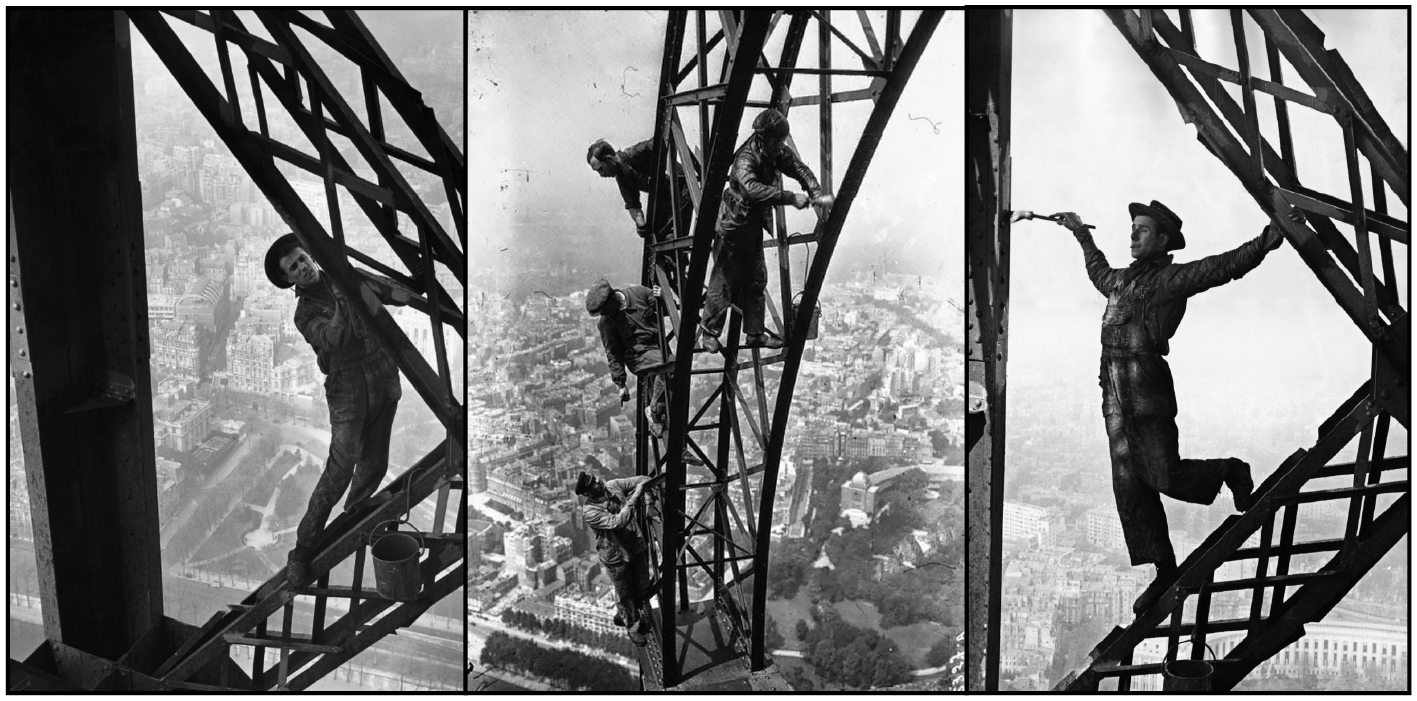
Safety standards sure have changed since 1932!

Since it’s initial construction, the Eiffel Tower has be re-painted 18 times – about once every 7 years.  It has changed colour several times, passing from red-brown to yellow-ochre, then to chestnut brown and finally to the bronze of today, slightly shaded off towards the top to ensure that the colour is perceived to be the same all the way up as it stands against the Paris sky. Sixty tons of paint are necessary to cover the Tower’s surface, as well as 50 kilometers of security cords, 5 acres of protection netting, 1500 brushes, 5000 sanding disks, 1500 sets of work clothes…and more than a year for a team of 25 painters to paint the Tower from top to bottom.

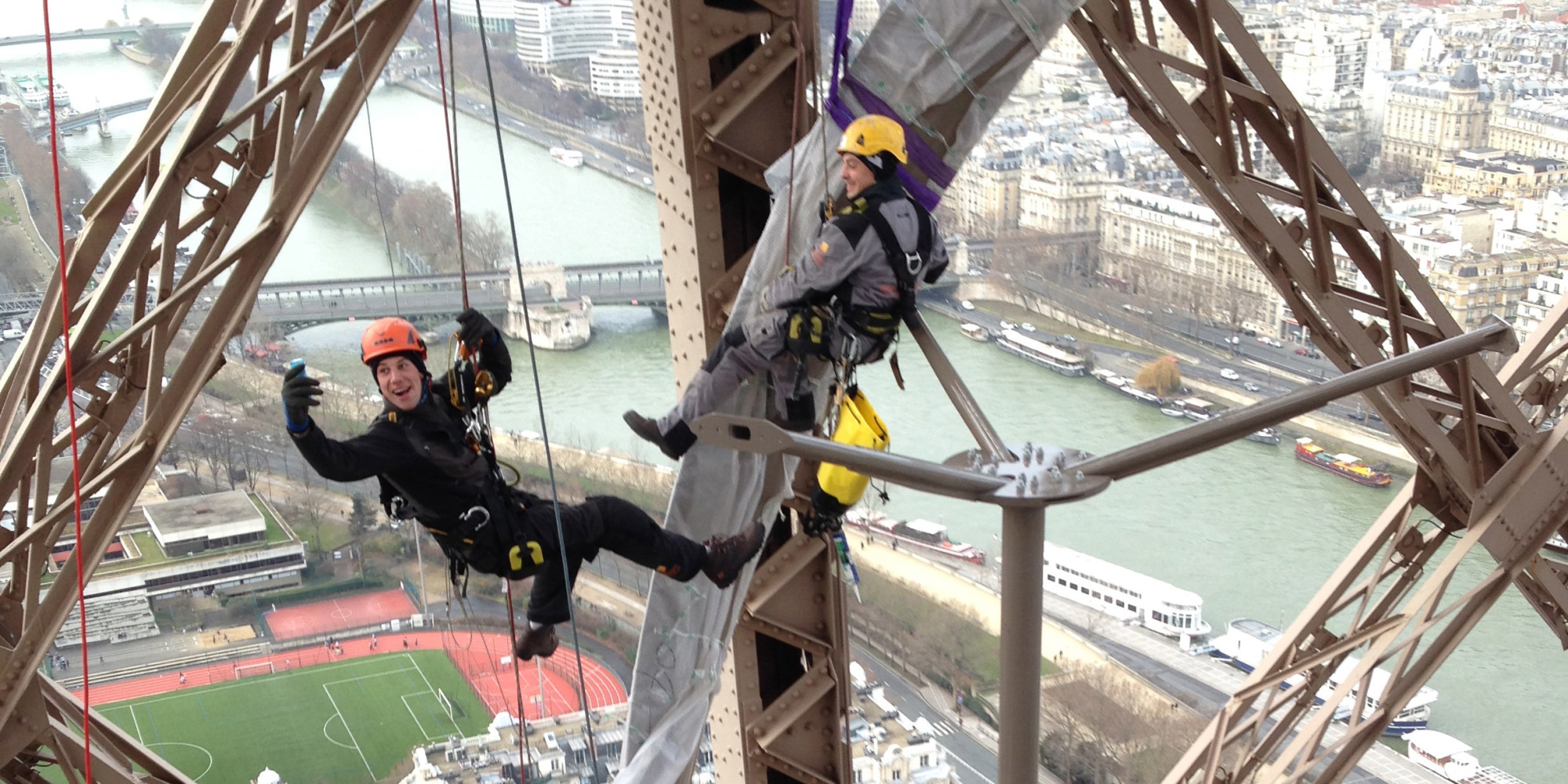
Probably the most amazing thing about the preservation work on the Tower is that it is done in the same way today (last painting was 2009) as it was when it was first built.  No sprayers are used – the entire structure is painted by hand!  Today the painters hang from safety harnesses and work their way meticulously (as Eiffel demanded) over every square inch of the structure with their brushes. Notice in the black and white photos the lack of safety equipment in earlier days though.

So here’s to the painters – who ensure that this monument to human ingenuity and icon of Paris remains stable, safe, and open to the public!

o-EIFFEL2-facebook

Modern methods involve a lot more safety features, but the essential job of painting the structure by hand remains the same.

OneLife Tours is dedicated to the absolute best in European travel experiences.  Our Grand Tour of Europe features 3 days in Paris, and of course a visit up the Eiffel Tower (without the lineups).  Contact our chief tour director Craig Bresett for more information.

[author] [author_image timthumb=’on’]https://pbs.twimg.com/profile_images/506116251454697472/4blfsXiS.jpeg[/author_image] [author_info]This blog happily shared with you by Craig Bresett (getting ready to re-paint my porch railing) – owner and chief tour director at OneLife Tours. Contact Craig anytime: craig@onelifetours.ca[/author_info] [/author]
High season in Europe? What high season?

“When is the best time to travel in Europe?”  Great question!  I think the answer is “whenever you can!”

I am often asked about the merits of travelling in Europe during the so-called “shoulder” season as opposed to “high” season.  Shoulder season is often defined loosely as spring and autumn, and high season as summer.  The obvious benefit of summer travel is the likelihood of  good weather.  The apparent benefit of shoulder season is the likelihood of smaller crowds.  However, over the last decade, so many people have heeded the recommendation for shoulder season travel that the crowds have pretty much evened out, meaning that there isn’t really a “high” season anymore.  I don’t mean to say that you’re going to see the same amount of people in St. Mark’s Square in January as you will see in July – but really, from March to October you are never going to find yourself alone riding the elevator up the Eiffel Tower, viewing the crown jewels in the Tower of London, or wandering through the Sistine Chapel.  I still read this recommendation in travel articles and wonder if the author has ever been to Venice in March or Vienna in October!

image001

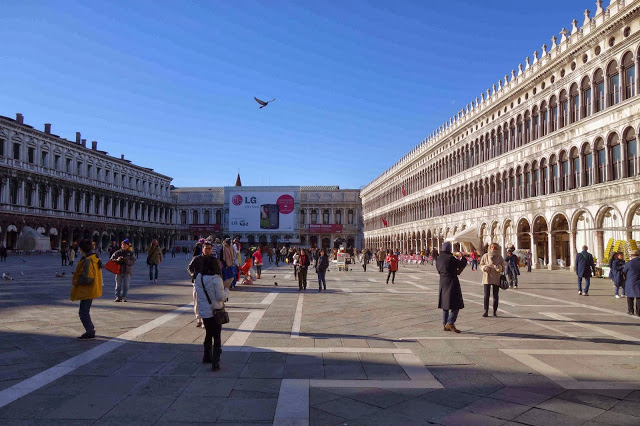
Early morning in St. Mark’s Square – crowd free!

So unless you want to brave the probability of poor weather in the winter for the sake of more elbow room at the Louvre, you are going to be travelling in Europe with lots of other people.  But if you plan well, you can avoid the pitfalls of the tourist season.  For example, it is good to know that many of the big box tour operators bring their huge busloads of tourists to the Palace of Versailles about an hour after it opens.  Arrive early and get in first (with a reservation of course) and you’ll have the first hour or so to enjoy the uncrowded rooms of Louis’ XIV’s pleasure palace with just a few other smart travelers.  Most of these big tour groups are gone by mid to late afternoon, so arrive later and you get the same experience.  Another crowd-beating tip is to understand that Venice is inundated with day-trippers from about 10 AM to 4 PM, most of whom are either coming in from mainland hotels that the big box tour companies use or from cruise ships in port for the day.  The key is to stay in Venice proper, and take advantage of the early morning / late afternoon and evening for visiting the most popular places that the day trippers will have on their checklists (St. Mark’s Basilica and Square, the Doge’s Palace, the Rialto), and take in some of the lesser visited gems midday (the sublime artistic masterpiece that is the Scuola Grande di San Rocco, the palace frozen in a long past golden age Ca’ Rezzonico, and many others).

3d44465f24656c331a733b47553bfeb4

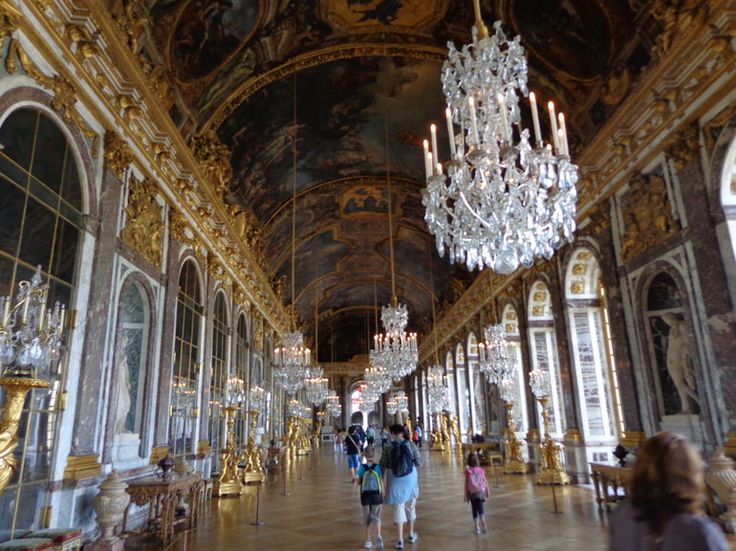
The Palace of Versailles, virtually empty in the late afternoon.

Travel in Europe when you want to, even mid-summer (which, after 10 years of guiding tours, is still my favourite time to be in Europe!)  With some research and planning, you won’t need to worry about lineups and crowds.

Have you got a travel tip of your own?  Feel free to share it in the comments section below.

OneLife Tours is dedicated to the absolute best in European travel experiences.  In addition to providing outstanding escorted tours for small groups, we also offer travel planning assistance for independent travelers wishing to have one-on-one expert advice.  Contact our chief tour director Craig Bresett for more information.

[author] [author_image timthumb=’on’]https://pbs.twimg.com/profile_images/506116251454697472/4blfsXiS.jpeg[/author_image] [author_info]This blog happily shared with you by Craig Bresett (without a crowd in sight) – owner and chief tour director at OneLife Tours. Contact Craig anytime: craig@onelifetours.ca[/author_info] [/author]