Archive for category: Uncategorized

Cheers to Europe’s Hidden Breweries: A Tasting Journey Like No Other! 🍻

Cheers to Europe’s Hidden Breweries: A Tasting Journey Like No Other! 🍻

Forget the usual beer tour clichés—Europe’s coolest local breweries are tucked away in unexpected corners, waiting for you to taste their stories. You’re about to join a European Beer Tour that serves up more than just pints—it delivers authentic experiences brewed by passionate locals. Ready to sip your way through hidden gems and uncover flavors you won’t find anywhere else? Let’s raise a glass to journeys that taste as rich as the culture behind them!

Belgium’s Secret Beer Havens

Belgium is famous for its beer, but there’s more than meets the eye. Join us as we explore tucked-away spots where tradition and taste blend perfectly.

Trappist Treasures Waiting

Step into the world of Trappist beers, where monks craft heavenly brews. At these abbeys, brewing is both art and devotion. Picture yourself sipping a rich ale in the serene grounds of Westvleteren Abbey, where only 60,000 cases are brewed annually. It’s a true testament to quality over quantity. But here’s a twist—many people think they know Belgian beer, but these secret spots will surprise even the seasoned beer lover. Imagine the stories behind each bottle, shared by monks who brew not just to quench thirst but to fund their communities. You’ll taste the passion in every sip, a unique blend of devotion and craft. Remember, these are not just beers—they’re a taste of history.

Crafting Culture in Brussels

Brussels, the heart of Belgium, offers more than waffles. Hidden in its narrow streets are small breweries redefining Belgian beer. Take Brasserie de la Senne, a pioneer in producing unfiltered, additive-free beers. They brew 20,000 hectoliters annually, focusing on quality over mass production. The scene here challenges the notion that Belgian beer is only Trappist. Here’s the key insight: you’ll find inspired brewers infusing modern twists into classic recipes, creating flavors both familiar and new. As you explore, you’ll see why Brussels is a hub of brewing innovation, where tradition meets the avant-garde. Join us to discover how these local brewers are shaping the future of Belgian beer.

Germany’s Hidden Beer Gems

From Belgium, we journey to Germany, a land where beer is a way of life. Beyond the Oktoberfest tents lies a world of undiscovered tastes.

Bavarian Brews Beyond Oktoberfest

Bavaria is synonymous with beer, yet many overlook its lesser-known breweries. Picture yourself at a cozy Bavarian tavern, sipping a rare Zoigl—an unfiltered lager brewed by local families. This tradition, dating back to the 1400s, is a communal craft. Each village takes turns brewing, fostering a shared passion for beer. This isn’t just beer; it’s a cultural heartbeat. Challenge the idea that Bavaria is all about big beer gardens and discover the charm of these intimate gatherings. Here’s the payoff: by the end of your visit, you’ll understand why Bavarians hold their local brews so dear. Ready to explore the true spirit of Bavaria?

The Czech Republic’s Brewing Secrets

Our final stop is the Czech Republic, a country synonymous with beer. Yet, beyond the famous pilsners lie secrets waiting to be uncovered.

Iconic Pilsners Reimagined

Czech pilsners are legendary, but there’s more brewing beneath the surface. Enter Pivovar Matuska, a family-run brewery crafting bold twists on classic styles. Here, they produce just 5,000 hectoliters annually, focusing on innovation. It’s a place where you’ll rethink what you know about pilsners. Many assume Czech beer is just about tradition, but these brewers are redefining the game. The takeaway? You’ll savor flavors that push boundaries, proving that even classics can evolve. Ready to taste the future of Czech beer? Explore global brewery tours.

Prague’s Quaint Brewery Spots 🍻

In Prague, history and beer unite in charming brewery nooks. Picture wandering into U Medvídků, a historic spot where the past meets the present. They brew Oldgott, a brew that nods to medieval recipes. Many think Prague is just about its landmarks, but its breweries are equally captivating. Here’s your insight: these spots offer more than a drink—they’re a journey into the city’s soul. As you explore, you’ll discover the stories behind each barrel, each pint a testament to Prague’s brewing heritage. Ready to uncover Prague’s brewery secrets? Watch more about Prague’s hidden spots.

By the end of this journey, you’ll have tasted the true essence of Europe’s brewing cultures. From Belgium’s secret havens to Germany’s hidden gems, and the Czech Republic’s brewing secrets, each sip tells a story. Cheers to discovering the heart of Europe, one pint at a time!

Savor the Continent: Top 3 Local Dishes You Must Try on Your European Adventure!

Savor the Continent: Top 3 Local Dishes You Must Try on Your European Adventure!

Forget the usual tourist traps and boring menus. When you travel Europe, the real magic happens on your plate. We’re talking about local dishes packed with stories, flavors, and history you won’t find in any guidebook. Join Eat and Drink Like a European for a culinary tour that turns every bite into a cultural adventure you’ll never forget. Ready to taste Europe like a local? Check out more on authentic local dishes here.

Taste European Cuisine

Discover Local Dishes

Europe is a treasure trove of authentic food experiences. Beyond the famous landmarks, the continent’s true charm lies in its diverse culinary offerings. As you wander through bustling markets and cozy eateries, you’ll uncover the heart of each region. Every dish tells a story, inviting you to taste the rich heritage of European culture.

Authentic Food Experiences

Immerse yourself in the vibrant flavors that define each country. Whether it’s the spices of southern Europe or the hearty meals of the north, there’s something for every palate. Savoring these dishes is more than just eating; it’s about experiencing a way of life. So, ready your taste buds for a journey that promises both adventure and comfort.

Top Must-Try Dishes

Savor France’s Coq au Vin

Imagine sitting in a quaint French bistro with a steaming plate of Coq au Vin before you. This classic dish combines chicken, red wine, mushrooms, and herbs in a way that feels both rustic and refined. The sauce, rich and deeply flavored, is a testament to centuries of tradition.

Take a bite, and you’ll be transported to the French countryside. It’s a meal that makes you appreciate the art of slow cooking and the joy of sharing food with loved ones. Planning your trip to experience this firsthand? Explore more about what makes Coq au Vin a must-try on any European adventure.

Relish Spain’s Paella

The sun sets over Valencia, and the aroma of saffron and seafood fills the air. Paella is more than just a dish; it’s a celebration. The blend of rice, seafood, and spices cooked to perfection makes for an unforgettable meal.

Every spoonful is a burst of flavor, a reflection of Spain’s vibrant culture. Enjoy it with friends, and you’ll feel the warmth and hospitality that define Spanish gatherings. This dish calls for a leisurely evening by the sea, where stories and laughter flow as freely as the sangria. Curious about the origins? Check out these insights from locals.

Book Your Culinary Tour

Immersive Travel Europe

Are you ready to taste your way through Europe? Our tours offer more than just meals; they provide a deep dive into the culinary traditions that shape each region. You’ll visit local markets, try your hand at cooking, and dine in off-the-beaten-path restaurants. It’s about cultural immersion and creating memories that last a lifetime.

Eat and Drink Like a European Deals 🍽️

With Eat and Drink Like a European, you’re not just a tourist; you’re part of the story. Our small group focus ensures personalized experiences, making each tour feel intimate and special. Don’t miss out on these opportunities to explore Europe’s culinary heart. The longer you wait, the more you’ll wish you had booked sooner. Ready to start your adventure? Learn more about the best dishes to try while traveling here.

Embark on a journey where every meal is a new experience. Let Eat and Drink Like a European make your travel dreams come true.

Why Our Expert Guides Make Every European Tour Exceptional

Why Our Expert Guides Make Every European Tour Exceptional

Most tours show you the sights, but few let you truly live the story behind them. Our expert guides don’t just lead—they bring Europe to life with passion and deep local insights. When you travel with knowledgeable guides, every moment turns into an authentic experience packed with cultural immersion. Ready to see Europe through new eyes?

Passionate Guides Enrich Every Tour

When you travel with us, each moment is enriched by guides who are passionate storytellers. They offer more than just facts; they share personal stories and local legends that make each site come alive.

Local Insights and Hidden Gems

Our guides know the roads less traveled and the stories lesser known. Imagine wandering through a bustling Paris market, where your guide introduces you to a vendor whose family has sold cheese there for generations. These are the moments that turn a trip into a treasure. Our guides are like keys, unlocking doors to secret courtyards and hidden cafes that most tourists miss.

Bringing History to Life

History is more than dates and events. Our guides paint vivid pictures of the past, helping you see the world through the eyes of those who lived it. You might stand on the very ground where pivotal battles were fought, while hearing the tales of heroes and everyday people. This is not just sightseeing; it’s time travel

Cultural Immersion with Expert Guides

Cultural immersion elevates travel from ordinary to extraordinary. With our guides, you don’t just visit Europe—you become part of its story. Every interaction, every experience, becomes a chapter in your own travel tale.

Authentic Experiences Beyond the Surface

Forget the typical tourist traps. Our tours dive deep into the heart of local life. Whether it’s joining a village festival or learning a traditional craft, our guides connect you with authentic experiences that are unforgettable. Picture yourself stepping into a local artisan’s workshop, where you not only observe but participate. You leave with more than souvenirs; you carry memories crafted with your own hands.

Culinary Adventures with Local Flavours

Food is a gateway to culture, and our guides know the best spots to savor local flavors. Imagine dining in a family-owned trattoria in Italy, where the pasta is handmade, and the stories flow as freely as the wine. Each meal is an opportunity to taste the soul of a region. Whether it’s tasting a fresh baguette in a hidden Parisian bakery or indulging in tapas in a bustling Spanish market, our guides ensure you experience the true essence of European cuisine.

Booking Your Next European Adventure

Your journey is just one decision away. Embrace the chance to see Europe through the eyes of our expert guides and start creating your own stories.

Testimonials from Happy Travelers 🌍✨

Here’s what our travelers say: “I never knew history could be this exciting until our guide shared stories that made every site unforgettable.” Another traveler raves, “The culinary adventures were a highlight. I felt like I tasted Europe, not just toured it.” See more happy travelers.

In a world where travel is often rushed and impersonal, our guides stand out by offering genuine connections and personalized experiences. They are more than guides—they are gateways to the essence of Europe. When you travel with us, you’re not just seeing Europe; you’re experiencing it in the most authentic way possible.

Westvleteren – not hype, this is deserved

Brother Godfried poses by the crates full of Westvleteren beers at the shop of the Saint-Sixtus Abbey.

Visiting In De Vrede, the modest yet legendary café-restaurant beside the Trappist Abbey of Saint Sixtus in Westvleteren, is a true pilgrimage for anyone who loves good beer. This is the only official place in the world where you can legally enjoy a glass of the famed Westvleteren Trappist ales—including the elusive Westvleteren 12, often hailed as the best beer on Earth. Sipped fresh, just steps away from where the monks brew it in small, contemplative batches, the beer takes on a near-mystical quality. The peaceful countryside setting, the quiet hum of cyclists and pilgrims passing by, and the understated charm of the café itself create a perfectly Belgian harmony of simplicity and perfection.

But In De Vrede is more than just a tasting room—it’s an experience that reflects the authentic spirit of Trappist brewing: patience, craftsmanship, and humility. Visitors can explore the small exhibition about the abbey’s history, savor hearty local dishes that pair beautifully with the beers, and browse the gift shop for a rare chance to buy a few bottles to take home. There are no flashy signs or marketing gimmicks here, only the quiet pride of a centuries-old tradition still alive and thriving. For true beer enthusiasts, a visit to In De Vrede isn’t just recommended—it’s essential, a once-in-a-lifetime encounter with the soul of Belgian brewing.

Join us here on the Ultimate Beer Tour!

Neuschwanstein Castle – The Very Best of the Alps

This bizarre castle, built on the side of a mountain in the middle of nowhere by a strange man-child caught up in medieval fantasies, always delights travelers fortunate enough to get out to this corner of the Alps.  And I’ve taken hundreds of them, if not thousands (I stopped counting a long time ago) here.  In 2020, when I had no groups to lead, my daughter Kasmira and I found ourselves in Europe researching our Very Best of the Alps trip.  And she suggested adding a stop at Neuschwanstein to the tour.  Why not?  It’s in the Alps, requires a bit of hiking to get to, and is close to the beautiful bavarian town of Fussen, where there’s great food and drink to be had.

Kasmira on Marienbrücke (Mary’s Bridge) ready to hike up into the mountains behind Neuschwanstein after our visit inside.

Not a “real” castle from the age of castles, but a pleasure palace created out of the fanciful imagination of King Ludwig II of Bavaria (and the taxes of the Bavarian people) on the cusp of the modern era, this is nonetheless probably the most recognized castle in the world.  Despite the fact that Ludwig only got to live in it for a short time after its completion on September 5, 1869 (my birthday, by the way! – well, different year) before being arrested by the Bavarian State Police and sent to a lakeside asylum (where he and his psychiatrist mysteriously drowned), the inside of this castle has a tale to tell.  To go inside you must book a timeslot and go with a guide.  They take you through the “finished rooms” (much of the castle is unfinished inside, and the Nazis stored stolen art in the unfinished rooms during WWII), including the Singer’s Hall (basically a private opera house for Ludwig and his guests), the Throne Room (throne never installed), and the drawing room filled with dozens of artistic representations of swans (part of the name of the castle in German – “new swan stone”).  Photos are not allowed inside, so I just pulled some from wikimedia commons, because I would never break the rules and take photos where they’re not allowed.

The drawing room (what we would call a “living room” in a normal house). The swan motif is everywhere, but it’s hard to find them in this picture. You’ll see them all when you visit the room in person.

The Singer’s Hall – they actually put on small concerts here from time to time today. I haven’t got an invite to one yet…

The amazing multi-ton chandelier hanging from the ceiling of the throne room. It is meant to evoke the crowns worn by Holy Roman Emperors in days gone by.

One last look at Neuschwanstein before we descend to the valley below.

After visiting the Neuschwanstein Castle for the 25th(?) time (again, who’s counting) and hiking up the mountain behind, we descended to the base where Ludwig’s old castle, Hohenschwangau sits.  In all my years visiting here, I had never been inside the little yellow castle – and now without a group or any time constraints I got to go in!  It’s beautiful inside!  But again, no photos allowed. This is where little Ludwig grew up.

Most of the time when I visit this area it is March and the gardens aren’t in bloom. Different story in the summer – gorgeous gardens – some wild, some manicured, surround Hohenschwangau.

After the castle visits, we headed into Fussen to our nice hotel and walked down the pedestrian streets to find a restaurant (Kasmira found a restaurant with a micro-brewery in it for me!).

Beim Olivenbauer was filled with locals – I think we were the only people not speaking German. Then again, it was August 2020, so not a lot of people travelling… Great food, and excellent home-brewed beer! I really only care about the beer.

The end of another beautiful day in the Alps….

…and the start of another beautiful day in the alps with breakfast on the patio of our lovely hotel! The adventure continues…

The Bacari of Venice

One of the true delights of a trip to Venice is the cuisine… unless you have no idea what to look for and end up at one of the plethora of terrible tourist traps serving up uninspired portions of bland food no self-respecting Venetian would eat.  An excellent choice that will satiate your hunger and suit pretty much any budget is a Bacaro (plural – Bacari).

Bacaro Risorto in Venice

Bacaro Risorto – one of my favourite’s in all of Venice!

Bacaro is the Venetian word for “bar”.  The typical Venetian bacaro offers “ombra” (a small glass of wine), aperitivo (think Spritz Campari or its milder cousin Spritz Aperol), and a nice selection of fresh cicchetti (small snacks or side dishes – like tapas in Spain).  Some of my favourites also have a small selection of tasty craft beers as well, like Bacaro Risorto, pictured above.

A small glass of wine and a plate of cicchetti as pictured above will only set you back a few euros.

Locals and visitors-in-the-know will make a nice evening visiting a few bacari, sharing drinks and snacks with friends – old and new alike!  It’s easy to meet new people at a bacaro – people generally crowd around the bar or stands on the square or sidewalk chatting with each other while enjoying their finger foods and drinks.  However, if your feet are tired from a day of sightseeing, you can probably find a table to relax at.

Locals chatting with the bartender about football and local politics.

One of my commitments when I started Eat and Drink Like a European was to ensure that in addition to high-end fine dining, my guests would always get a chance to connect with the locals and eat the way they do every day.  I hope you can join me on a Bacari “crawl” on our next Very Best of Northern Italy Tour!


What Child Is This?

The famous Christmas carol, penned in 1865 by English writer William Chatterton Dix on his “death bed” (he later recovered), asks the question “What child is this, who laid to rest, on Mary’s lap is sleeping?” and answers “This is Christ, the King”.  Interspersed in his thoughtful lyrics, set to the tune of the medieval English song Greensleeves, are references to shepherds, angels, ox and ass, incense, gold, and myrrh – familiar figures and objects in a traditional nativity scene (also called a crèche).

Two German children admire a small nativity just as their ancestors have done for generations.

Nativities are very popular during the Christmas season – millions of people have small versions in their own homes (we have six!), and many larger scenes are set up in church parking lots, town squares, library courtyards, and front lawns.  One of our local churches has a crèche display in their community hall with over 100 different nativity scenes from all over the world.

There amongst the red-nosed reindeer and Santa Claus is an illuminated nativity in the yard of our neighbour, known affectionately as Mr. Christmas.

Where did this tradition begin?  Many expect the answer to be Germany because so many of our modern Christmas traditions come from the Germanic world, but in fact the nativity originates in medieval Italy.

Built straight out of the stone, the Greccio Franciscan hermitage is an extraordinary fusion of architecture and nature.  It was here that St. Francis first recreated the Christ birth scene on Christmas Eve, 1223.

In 1223, St. Francis of Assisi was visiting the small village of Greccio.  As Christmas approached, he was struck with the idea of creating a scene to represent the birth of Christ for the people of the village.  This was a novel idea, and as such he requested and was granted permission from the pope to create the first nativity scene, to be displayed during Midnight Mass.  It was a live scene – real baby, real donkey, real hay.  According to his biographer, “St. Francis stood before the manger, full of devotion and piety, bathed in tears and radiant with joy.”  The scene so moved the great monk that he could not bring himself to even utter the name of the Lord, instead referring to him repeatedly as the Babe of Bethlehem in his sermon that night – indeed, the whole village was moved to tears. News of the spiritual outpouring reached the Vatican, and the tradition of the nativity scene was spread throughout Europe.  

Famous pre-Renaissance Italian artist Giotto painted a history of the life of St. Francis in the monastery of Assisi.   This piece is called Institution of the Crib at Greccio – a scene depicting St. Francis creating the first nativity.

This tradition has continued to today, where you will find beautiful nativity scenes in cities, towns, and villages throughout Europe during the Christmas season. Europe is the home to so many of our traditions, both Christmas and otherwise. Below are some great nativity scenes from around Europe.  Enjoy!  To join us at the Basilica of St. Francis sign up for our Sacred Heart of Italy Tour.

Every year the Vatican sets up an elaborate nativity scene in St. Peter’s Square.

A detailed crèche on display in Budapest, Hungary.

This 1476 fresco by Sandro Botticelli is in Santa Maria Novella in Florence, Italy.

The nativity in stained glass in the Saint Eustache church of Paris, France.

Creative use of straw in Prague.

A live nativity in a Dolomites mountain village in Italy.

Balsamic Vinegar Tour and Tasting

Real balsamic vinegar is produced as a “hobby” by the fine wineries of the Modena / Parma agricultural valley. On our tour we visit one of the premium wine makers of the region, the Medici Ermete, and have an exclusive tour and tasting of their family’s small Acetia where they produce the tasties balsamic vinegar you have ever tried.

Beer Hunting in Bruges

You can count on Medieval Bruges for beautiful art and architecture, delicious food and chocolate, and AMAZING beer experiences! We always have time on the Ultimate Beer Tour for some beer hunting – and the hunting is easy if you know who to talk to (that would be me, Craig, your trusty tour guide!).

Pesto Making in the Cinque Terre

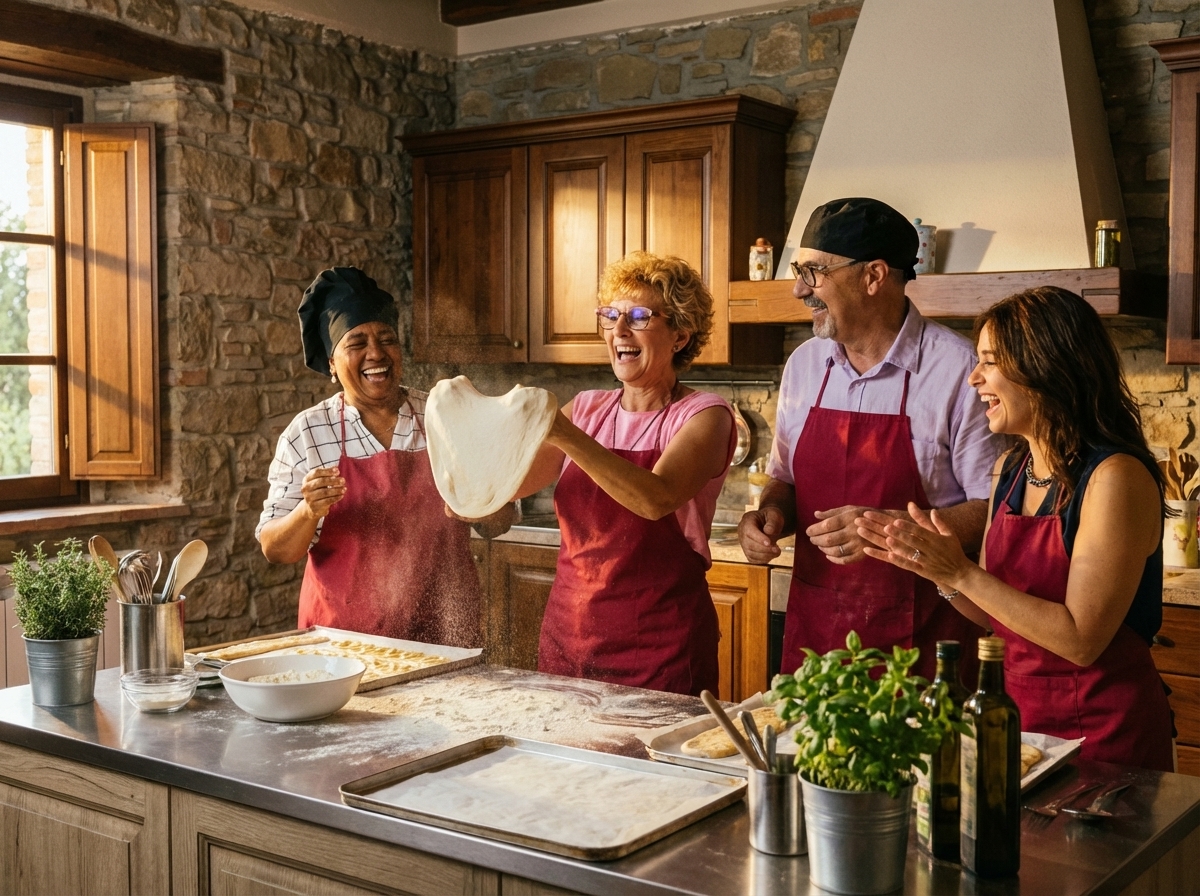
One of my favourite experiences in Liguria is taking part in a pesto making class. The art of pesto comes from this beautiful seaside region, and learning from a local is the best way to experience the food, rather than just eating the food! This is part of our Eat and Drink Like a Northern Italian tour.