Archive for category: Uncategorized

7 simple tips to "café" like a pro in Paris

I know café is not really a verb.  But I’m choosing to ignore that.

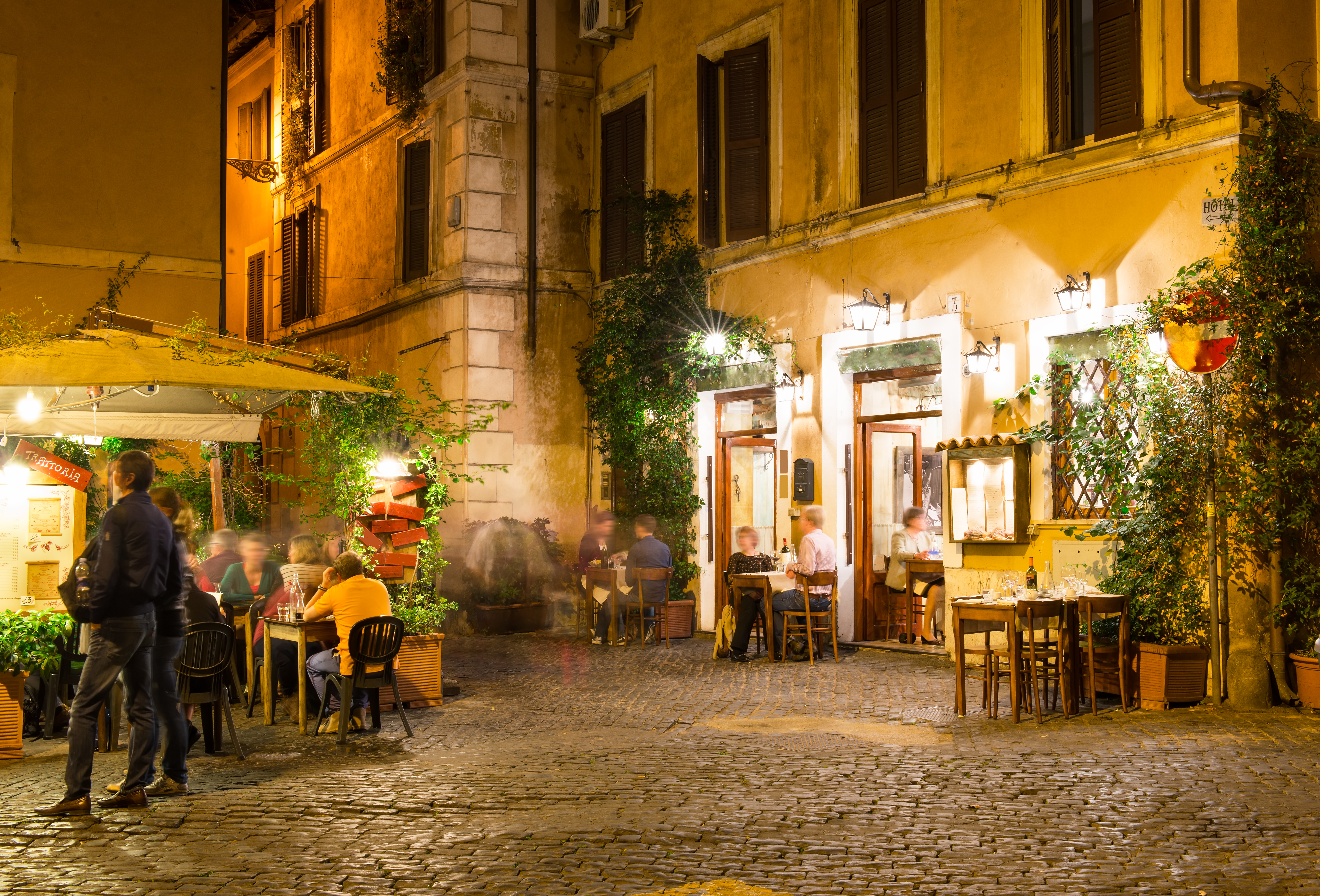
So how does one “café” in Paris?  Follow these 7 simple tips from the Paris Tourist Office and your waiter might not even realize you’re a tourist (unlikely, but possibly!).

1. There’s no rush. Drinks are priced to allow you to take your time at the table, chatting with friends, people-watching, reading a newspaper, writing notes or postcards. The waiter won’t harry you. One cup of coffee allows you to sit at the table for quite a long time, but probably not all day.

2. Smoking is prohibited inside all cafés and restaurants, but not at open-air tables. Depending on the breeze, smoke from outside tables can waft into the café. If you’re particularly sensitive to tobacco smoke, choose your table accordingly. This particular little annoyance needs attention, not least because it means that non-smokers are obliged to sit inside, even on a hot and muggy day. Still, it’s a marked improvement on the days when, if you asked for a non-smoking table inside a restaurant, you could well end up just a foot from a ‘smoking’ table.

3. Café means coffee: the correct term for the place where you have a coffee is café-bar, because Paris cafés serve all sorts of drinks, hot and cold, including herbal teas (infusion and tisane), mineral water, beer, wine and pastis….well, just about anything!

4. Cafés serve food as well, from croissants and tartines in the morning to soups, croque monsieur and other lunchtime dishes, to elaborate dishes for dinner. Even though they are not restaurants, you can order the equivalent of a three-course dinner with wine or beer at a café.

5. Many cafés offer service non-stop, meaning they’re open from morning till night. This is useful to know, because many restaurants traditionally close during the late afternoon between lunch and dinner.

6. To call the waiter, say ‘Monsieur’ (not ‘Garçon’). Adding ‘S’il vous plait’, also helps, as does saying ‘Bonjour’ when you first arrive, and ‘Au revoir’. Forget these little niceties, and you could end up waiting longer than you’d like.

7. Tips, also known as the service charge, are included in all the prices printed on menus. So, you don’t need to leave anything additional. Of course, if it amounts to small change, why not?


OneLife Tours is dedicated to the absolute best in European travel experiences.  Our Grand Tour of Europe features 3 days in Paris, where you’ll have plenty of time to visit the traditional cafés.  Contact our chief tour director Craig Bresett for more information.

[author] [author_image timthumb=’on’]https://pbs.twimg.com/profile_images/506116251454697472/4blfsXiS.jpeg[/author_image] [author_info]This blog happily shared with you by Craig Bresett (enjoying a caffé latte) – owner and chief tour director at OneLife Tours. Contact Craig anytime: craig@onelifetours.ca[/author_info] [/author]

Rust Never Sleeps

The Eiffel Tower, that accidental icon of Paris, is under constant threat, and the armed soldiers walking around the base are doing nothing to stop it.  Though their presence is accepted and appreciated by visitors and Parisians alike, the threat I’m talking about is perpetual and cannot be warded off by security measures.

The Eiffel Tower is constructed of puddle iron.  Puddle iron’s natural enemy is rust.  And, as Neil Young so poetically stated –  Rust Never Sleeps.  Gustave Eiffel, the tower’s eponymous builder, knew this to be the case, and pointed out back in 1900 that the real saviours of the tower would be the painters.  “We will most likely never realize the full importance of painting the Tower, that it is the essential element in the conservation of metal works and the more meticulous the paint job, the longer the Tower shall endure.”


Screenshot 2015-08-15 13.20.30

Safety standards sure have changed since 1932!

Since it’s initial construction, the Eiffel Tower has be re-painted 18 times – about once every 7 years.  It has changed colour several times, passing from red-brown to yellow-ochre, then to chestnut brown and finally to the bronze of today, slightly shaded off towards the top to ensure that the colour is perceived to be the same all the way up as it stands against the Paris sky. Sixty tons of paint are necessary to cover the Tower’s surface, as well as 50 kilometers of security cords, 5 acres of protection netting, 1500 brushes, 5000 sanding disks, 1500 sets of work clothes…and more than a year for a team of 25 painters to paint the Tower from top to bottom.

Probably the most amazing thing about the preservation work on the Tower is that it is done in the same way today (last painting was 2009) as it was when it was first built.  No sprayers are used – the entire structure is painted by hand!  Today the painters hang from safety harnesses and work their way meticulously (as Eiffel demanded) over every square inch of the structure with their brushes. Notice in the black and white photos the lack of safety equipment in earlier days though.

So here’s to the painters – who ensure that this monument to human ingenuity and icon of Paris remains stable, safe, and open to the public!

o-EIFFEL2-facebook

Modern methods involve a lot more safety features, but the essential job of painting the structure by hand remains the same.

OneLife Tours is dedicated to the absolute best in European travel experiences.  Our Grand Tour of Europe features 3 days in Paris, and of course a visit up the Eiffel Tower (without the lineups).  Contact our chief tour director Craig Bresett for more information.

[author] [author_image timthumb=’on’]https://pbs.twimg.com/profile_images/506116251454697472/4blfsXiS.jpeg[/author_image] [author_info]This blog happily shared with you by Craig Bresett (getting ready to re-paint my porch railing) – owner and chief tour director at OneLife Tours. Contact Craig anytime: craig@onelifetours.ca[/author_info] [/author]

High season in Europe? What high season?

“When is the best time to travel in Europe?”  Great question!  I think the answer is “whenever you can!”

I am often asked about the merits of travelling in Europe during the so-called “shoulder” season as opposed to “high” season.  Shoulder season is often defined loosely as spring and autumn, and high season as summer.  The obvious benefit of summer travel is the likelihood of  good weather.  The apparent benefit of shoulder season is the likelihood of smaller crowds.  However, over the last decade, so many people have heeded the recommendation for shoulder season travel that the crowds have pretty much evened out, meaning that there isn’t really a “high” season anymore.  I don’t mean to say that you’re going to see the same amount of people in St. Mark’s Square in January as you will see in July – but really, from March to October you are never going to find yourself alone riding the elevator up the Eiffel Tower, viewing the crown jewels in the Tower of London, or wandering through the Sistine Chapel.  I still read this recommendation in travel articles and wonder if the author has ever been to Venice in March or Vienna in October!

image001

Early morning in St. Mark’s Square – crowd free!

So unless you want to brave the probability of poor weather in the winter for the sake of more elbow room at the Louvre, you are going to be travelling in Europe with lots of other people.  But if you plan well, you can avoid the pitfalls of the tourist season.  For example, it is good to know that many of the big box tour operators bring their huge busloads of tourists to the Palace of Versailles about an hour after it opens.  Arrive early and get in first (with a reservation of course) and you’ll have the first hour or so to enjoy the uncrowded rooms of Louis’ XIV’s pleasure palace with just a few other smart travelers.  Most of these big tour groups are gone by mid to late afternoon, so arrive later and you get the same experience.  Another crowd-beating tip is to understand that Venice is inundated with day-trippers from about 10 AM to 4 PM, most of whom are either coming in from mainland hotels that the big box tour companies use or from cruise ships in port for the day.  The key is to stay in Venice proper, and take advantage of the early morning / late afternoon and evening for visiting the most popular places that the day trippers will have on their checklists (St. Mark’s Basilica and Square, the Doge’s Palace, the Rialto), and take in some of the lesser visited gems midday (the sublime artistic masterpiece that is the Scuola Grande di San Rocco, the palace frozen in a long past golden age Ca’ Rezzonico, and many others).

3d44465f24656c331a733b47553bfeb4

The Palace of Versailles, virtually empty in the late afternoon.

Travel in Europe when you want to, even mid-summer (which, after 10 years of guiding tours, is still my favourite time to be in Europe!)  With some research and planning, you won’t need to worry about lineups and crowds.

Have you got a travel tip of your own?  Feel free to share it in the comments section below.

OneLife Tours is dedicated to the absolute best in European travel experiences.  In addition to providing outstanding escorted tours for small groups, we also offer travel planning assistance for independent travelers wishing to have one-on-one expert advice.  Contact our chief tour director Craig Bresett for more information.

[author] [author_image timthumb=’on’]https://pbs.twimg.com/profile_images/506116251454697472/4blfsXiS.jpeg[/author_image] [author_info]This blog happily shared with you by Craig Bresett (without a crowd in sight) – owner and chief tour director at OneLife Tours. Contact Craig anytime: craig@onelifetours.ca[/author_info] [/author]

Don't order French Fries in Belgium!


Frites – the national dish of Belgium

Dating back to the 1600’s, people in the French speaking region of Belgium (Wallonia) experienced a shortage of river fish that they would usually catch and fry up in the winter.  Someone got the idea to cut potatoes, a recent import from South America, into small slivers, shaped somewhat like the little fish, and fry them up instead.  And voilà, the frite was born.  It was American servicemen helping to liberate Belgium in WWI who wrongly gave them the name “French fries”, presumably because the people in Wallonia spoke French.  Belgium recently applied to UNESCO to give their frites world heritage status, so, yeah, they take them pretty seriously.  Please don’t ask a Belgian waiter for French fries, unless you would like this history lesson repeated each time you do!

Proper frites are never frozen (sorry McDonald’s et. al) and should not be too skinny or too thick (about 1 cm square if you want to get technical).  They are fried twice – once at 150° C and then again at 175 ° C. The result is a golden fry that is crispy on the outside  and soft inside.  They are properly served with a dollop of mayonnaise, although the creative Belgians have come up with all sorts of interesting dipping sauces.  My favourite is pepper sauce and spicy relish.  OK, I’m so hungry right now…

You can get good frites at pretty much any decent restaurant in Belgium.  In Bruges, I like to get them from one of the two historic frituur at the base of the towering Belfort on Market Square.  Just look for the little green structures.  They are generally open 10:00 to 24:00, but sometimes later on the weekends.  Cheap – just a few euros for a small (which is plenty for one person).  And if you really don’t want mayo or one of the other unique sauces with your fries, you can ask for ketchup.  They won’t laugh at you.

9489729424_ce92fe33c9_b

OneLife Tours is dedicated to the absolute best in European travel experiences for our small groups.  If you want your travel in Europe to be authentic and focussed on being a “temporary local” then we’re your company!

[author] [author_image timthumb=’on’]https://pbs.twimg.com/profile_images/506116251454697472/4blfsXiS.jpeg[/author_image] [author_info]This blog happily shared with you by Craig Bresett (about to go search for potatoes in the pantry) – owner and chief tour director at OneLife Tours. Contact Craig anytime: craig@onelifetours.ca[/author_info] [/author]

666 panes of glass, and the actual controversy of the Louvre Pyramid

Trop nombreux visiteurs, pas assez d’espace!

By the 1980’s it was apparent that the Louvre, the world’s most famous museum, had to make a change.  The number of daily visitors completely overwhelmed the inadequate entrance area, but art fans kept coming in larger numbers.  A decision was made to excavate the central courtyard and create an underground lobby to accommodate all the people.  But what about the entrance? Famed architect I.M. Pei (who is still around and working today at age 98!) was commissioned to design a unique entrance to the old palace – a steel and glass pyramid.  As part of the package, 7 pyramids were to be built, including an inverted one, but the big one in the centre of the courtyard would serve as the main entrance to the museum.  Parisians, who have been known to throw a fit over anything that disrupts the undeniable architectural harmony of their city (for example, they wanted the Eiffel Tower torn down, but that’s another blog topic…) were generally not happy with the futuristic design.  An editorial described French President François Mitterrand, who ultimately gave approval to the design, as having a “pharaoh” complex.  I don’t think he intended to be buried under the pyramid though!  Work proceeded regardless of the controversy, and in 1989 the new pyramid entrance and underground lobby of the Louvre was opened to the public, forever making the museum more accessible and open.  I’ve talked to Parisians who still hate it, but most have come to accept it as a unique, if not necessarily beautiful, part of the urban landscape.

Paris_July_2011-27a

Pei’s idea for a steel and glass pyramid was meant to create as little obstruction to the view as possible, while allowing a large entrance area. Do you think he succeeded?

“Controversy” or just fiction?

Dominique_Setzepfandt_Francois_Mitterand_Grand_Architecte_de_l_UniversFrench conspiracy theorist Dominique Stezepfandt’s book François Mitterrand, Grand Architecte de l’Univers propagated the idea that the pyramid was specifically built with 666 panes of glass and was “dedicated to a power described as the Beast in the Book of Revelation”.  Simple counting reveals that there are 673 panes of glass in the pyramid – talk about not doing your research! So much DaVinciCodefor that goofy theory.


Dan Brown’s immensely popular novel The DaVinci Code asserts that the sarcophagus of Mary Magdalene lies under the inverted pyramid in the Louvre’s underground shopping mall.  That, even the author will tell you, is of course just fiction.  But it made for an interesting end to the book.

pl4_pyramide_inversee

So what do you think of all the modern steel and glass at the Louvre?  Let me know in the comments.

OneLife Tours is dedicated to the absolute best in European travel experiences for our small groups.  Our Grand Tour of Europe spends three glorious days in Paris, with a special guided tour of the highlights of the enormous Louvre Museum.

[author] [author_image timthumb=’on’]https://pbs.twimg.com/profile_images/506116251454697472/4blfsXiS.jpeg[/author_image] [author_info]This blog happily shared with you by Craig Bresett (currently in a room with only 6 panes of glass) – owner and chief tour director at OneLife Tours. Contact Craig anytime: craig@onelifetours.ca[/author_info] [/author]

The five BIG BAVARIAN foods you need to eat

Bavarians don’t just eat beer.  They also eat food.  And it is some of the heartiest, earthiest, heaviest food in Europe.  Heavy in a good way, like an anchor that keeps you from floating away from the beer garden.  Here to make your mouth water, are 5 traditional foods you need to eat when visiting Munich or anywhere else in Germany’s fun province, Bavaria.

Weisswurst and Pretzel:  Hey, it’s breakfast time in Bavaria, so you’re obviously enjoying a Weißbier (a cloudy, slightly sweet wheat beer).  You need something solid to go with it.  Do as the Germans do, and enjoy at weisswurst (white sausage).  Looking a little different than your typical North American breakfast sausage, and boiled instead of fried, it’s a nice “light” (by Bavarian standards) way to start the day.  With a pretzel, please.

CG9-LouVIAE7N5q

President Obama recently shared a traditional weisswurst breakfast with German Chancellor Angela Merkel.

Weißwurst-1

Weisswurst is typically eaten with mustard and a pretzel.


Käsespätzle:  Please, don’t call this mac n cheese.  That’s for kids.  Käsespätzle is for grownups, made with small twisty dumplings, emmenthaler cheese, and onion.  Not a hint of orange food colouring in sight.

spaetzle

Please sir, may I have some more?


Schnitzel:  Apparently, you can schnitzel pretty much anything.  Though veal is the most common member of the schnitzel family, there’s pork, there’s chicken… I’ve even had fish schnitzel.  The process is quite simple.  Take your slab of meat, pound the heck out of it, bread it, deep fry it, and eat it.  Food doesn’t get much “heavier” than that!

Wiener-Schnitzel02

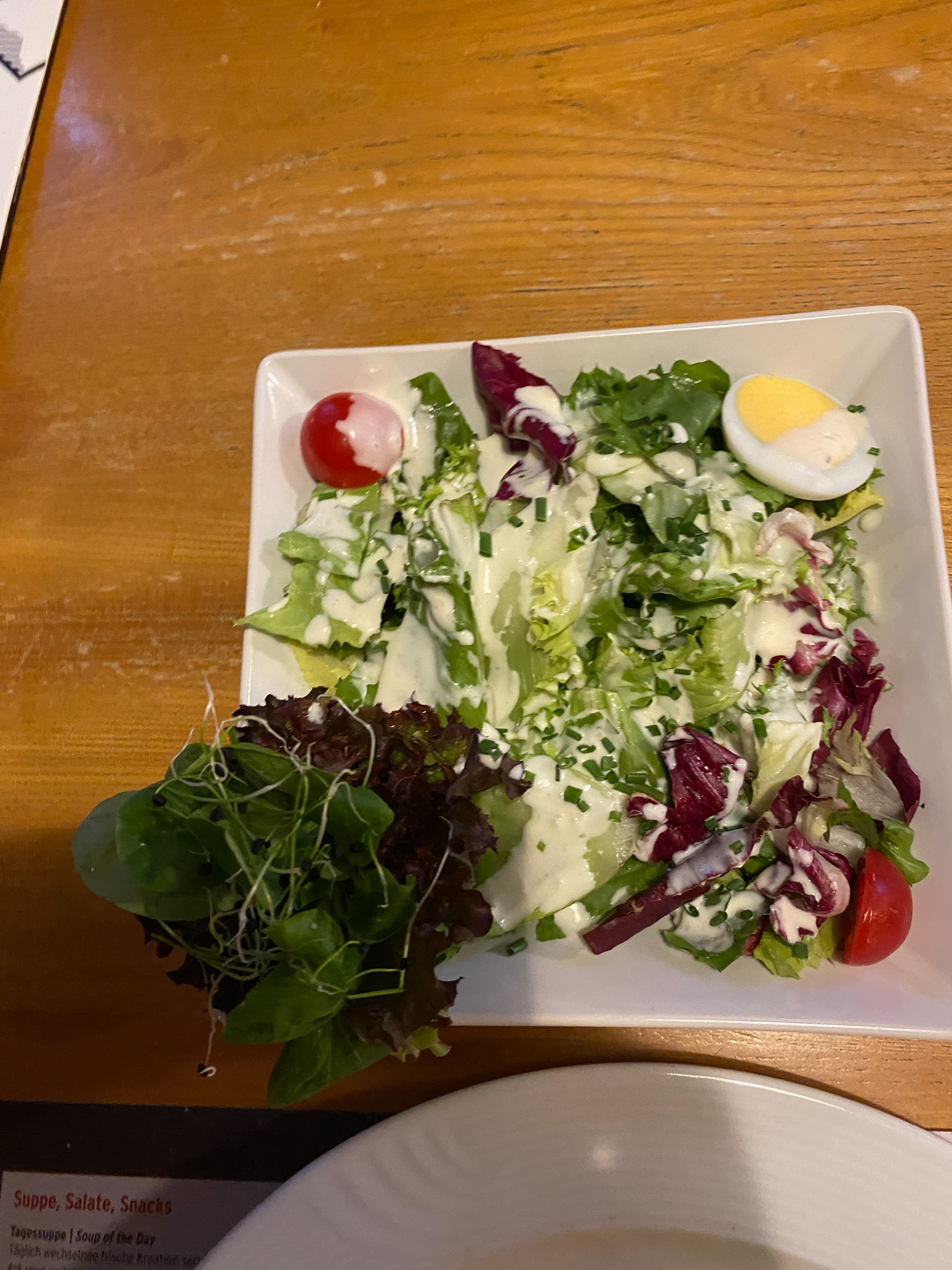
What’s the salad for?

Schweinshaxe: No, that’s not the name of a German metal band (though maybe it should be).  This is the grand-daddy of all Bavarian cuisine.  Alternatively called “pork knuckle” or “ham hock”, this is big food. Tuck into one of these for lunch, you won’t be needing dinner.  Takes some serious effort to eat – this is a real food experience.

schweinshaxe-wirsing-gemuese

I don’t recommend trying to eat two of these at one sitting.

Did I miss your favourite Bavarian food?  Let me know in the comments!
OneLife Tours is dedicated to the absolute best in European travel experiences for our small groups.  If you want your travel in Europe to include authentic, mouth-watering, local cuisine, sign up for one of our unique tours today!

[author] [author_image timthumb=’on’]https://pbs.twimg.com/profile_images/506116251454697472/4blfsXiS.jpeg[/author_image] [author_info]This blog happily shared with you by Craig Bresett (trying not to get Käsespätzle on my keyboard) – owner and chief tour director at OneLife Tours. Contact Craig anytime: craig@onelifetours.ca[/author_info] [/author]

Why is travel in Europe so easy?

Screenshot 2015-07-05 23.22.26On a recent trip across the Canada/USA border to celebrate Independence Day with my American relatives, I found myself wishing I was in Europe.  Not because I don’t like the 4th of July, vast open spaces, and fireworks – I do.  It was the border that got me.  On the way back into Canada, we had to sit in a ridiculously long lineup to go home, and my mind wandered to Europe and its amazingly vast assortment of borders, most of which greet you with a “Welcome to (insert correct language and country name here) ” as you whiz by on the freeway, cycle past on a country path, or drift around on a riverboat.  “Why is travel in Europe so easy?” I found myself thinking.

C4E4CJ Country sign of the Grand Duchy of Luxembourg at the national border near Schengen, Luxembourg

C4E4CJ Country sign of the Grand Duchy of Luxembourg at the national border near Schengen, Luxembourg

Turns out, my thoughts happened to coincide with the anniversary of a summit that happened in Luxembourg 30 years ago.  Schengen is a tiny riverside village nestled in the southern tip of Luxembourg, basically surrounded by the borders of France, and Germany.  For its residents, who primarily work in the wine trade, simple travel to a neighbouring village used to be a slow and frustrating experience as there were manned border stops basically all around them.  In a continent of dozens of small, and smaller countries, this is obviously a problem, and perhaps nowhere as evident as in Schengen.  So the members of the fledgling European Union got together in this little village and discussed the problem like rational adults.  And on June 14, 1985, they came up with an agreement to slowly, but surely, abolish border stops.  Not only would this lead to a stronger economy (think of all the down time of trucks sitting in border lineups!) it would simplify travel for locals and tourists alike.

Today’s Schengen Area includes 26 nations that have eliminated internal border controls with the other Schengen members and strengthened external border controls with non-Schengen states. The Schengen area encourages the free movement of goods, information, money and people.  For the traveler, this grand experiment in freedom is an unmitigated success, and answers the question posed in the title of this post.


OneLife Tours is dedicated to the absolute best in European travel experiences for our small groups.  If you want your travel in Europe to be carefree and joyful, book a tour with us today!

[author] [author_image timthumb=’on’]https://pbs.twimg.com/profile_images/506116251454697472/4blfsXiS.jpeg[/author_image] [author_info]This blog happily shared with you by Craig Bresett (composed while sitting in the Sumas/Abbotsford border lineup well past midnight, let it be known) – owner and chief tour director at OneLife Tours. Contact Craig anytime: craig@onelifetours.ca[/author_info] [/author]

Tower or Dungeon?

Where would you rather be, in a tower or in a dungeon?  Well if you travel to Germany’s Rothenburg ob der Tauber, you can certainly try both.  Rothenburg o.d.T. (not to be confused with numerous other Rothenburgs in Europe) is a quintessentially Bavarian town, with all the cobblestones, half-timbered houses, beer and sausages one would expect in this part of Germany.  But more than that, it is a living museum of a glorious past.


Rothenburg used to be a Free Imperial City of the Holy Roman Empire – meaning it had essentially broken away from any larger kingdoms or overlords and been given a charter to operate as an independent city state.  This allowed for great prosperity to develop within the still-intact town walls, while much of the rest of Europe continued to wallow in the economic quagmire of feudalism.  But all things must pass, and Rothenburg’s Golden Age had to come to an end.

As with other well-preserved medieval towns (Bruges comes to mind), Rothenburg’s centuries-old economic collapse was the modern traveler’s gain.  After narrowly averting total destruction during the 30 Years War, apparently due to the local mayor’s ability to down a lot of wine (I’ll save that story for another blog), Rothenburg kind of fell off the economic map of the German territories as trade routes shifted.  So instead of undergoing a series of renovations to keep the town “modern”, the impoverished citizens had to settle with living in their medieval buildings in relative obscurity until the age of Romanticism in the mid 19th century started bringing in tourists looking for some romanticized ideal of medieval life.  And they haven’t stopped coming since.

So now, when you visit Rothenburg, among other medieval/Bavarian activities, you can climb down the stairs to the dungeon in the Kriminal Museum and contemplate the many creative ways our ancestors came up with to torture, uh, our other ancestors.  Or you can climb the Rathausturm (townhall tower) and squeeze through what is possibly the smallest door in Europe to access what is possibly the smallest balcony in Europe.  But the views are grand!  Me, I’d do both.
Rothenburg Germany Town Hall shutterstock_2190557Above: (TOWER)  The white tower of the town hall does what a tower is supposed to do and towers over the city centre.  From the top you can survey not only the whole town but the beautiful Bavarian countryside surrounding it.

Below: (DUNGEON) The Kriminal Museum actually covers 4 floors and is the best collection of implements relating to the medieval justice system anywhere in Europe.  But you get to start your tour in the dungeon.
Screenshot 2015-07-02 14.53.48

Practical Info:
The Kriminal Museum – Hours:  10 AM to 6 PM May to October; varies the rest of the year.  Cost: €5 Adults, €3 kids (and kids love this place!) Address: Burggasse 3, 91541 Rothenburg ob der Tauber, Germany Phone:+49 9861 5359
Rathausturm – Hours: 9:30 AM to 12:30 PM / 1:00 PM to 5:00 PM April to October.  Closed in winter.  Cost:  A measly €2 (pay near the top).  Go for it!  Address – Just go to the Market Square and look up.  Entrance to the tower, somewhat confusingly, is through the town hall door facing the Market Square.
OneLife Tours is dedicated to the absolute best in European travel experiences for our small groups.  And Rothenburg ob der Tauber is a much-loved stop on our popular Grand Tour of Europe.  Join us in dungeons and towers alike!


[author] [author_image timthumb=’on’]https://pbs.twimg.com/profile_images/506116251454697472/4blfsXiS.jpeg[/author_image] [author_info]This blog happily shared with you by Craig Bresett (while sitting in a dungeon to get out of the heat, let it be known) – owner and chief tour director at OneLife Tours. Contact Craig anytime: craig@onelifetours.ca[/author_info] [/author]

How To Travel Europe Hassle-Free (While Seeing More)

 
Traveling in Europe requires a bit of a learning curve. 

Picture yourself in a new city standing on a street corner, map outstretched before you while your traveling companion tries to cross-reference your location with your trusty guide book. In less than an hour, your train leaves from the station across town—but you’re still trying to locate the closest metro station. 
Quite quickly your romantic European vacation can morph into an unexpected opportunity for you to practice your conflict resolution skills. 
If you’re trying to see a number of different cities, scenes like these can become all too common. It’s easy to spend a lot of time and energy managing your itinerary, catching your next flight, and finding your next hotel—while schlepping yourself and your luggage all over the streets of the beautiful European cities you’re trying to enjoy.


With OneLife Tours it’s easy—simply bring your bag down to the hotel lobby and step into our private coach. We drive you door to door, accompanied by our expert guides. All of our tours are designed to make travel between cities hassle-free and expedient.

Because we have our own vehicle, we have a degree flexibility that simply isn’t possible while traveling by rail or plane. We take advantage of this flexibility by stopping at noteworthy historical sites that would be next to impossible to see otherwise. For instance on our Grand Tour we’re able to make a stop at the fascinating site of the battle of Verdun. During the First World War, this small French village was the stage for the longest continuous battle in the history of modern warfare. 

 
Our guides are passionate about the places we visit and know exactly where to go and what to see. Our tours allow you to maximize your enjoyment of Europe while minimizing your stress and planning. You can sit back and enjoy the ride knowing you’ll arrive in the next city with the time and energy to explore. 

With OneLife Tours there’s zero hassle and zero time wasted on missed connections and other unexpected headaches that can come with navigating unfamiliar foreign cities. 
Free up your time and energy with OneLife Tours to truly explore the magnificent art, culture, and food of Europe.